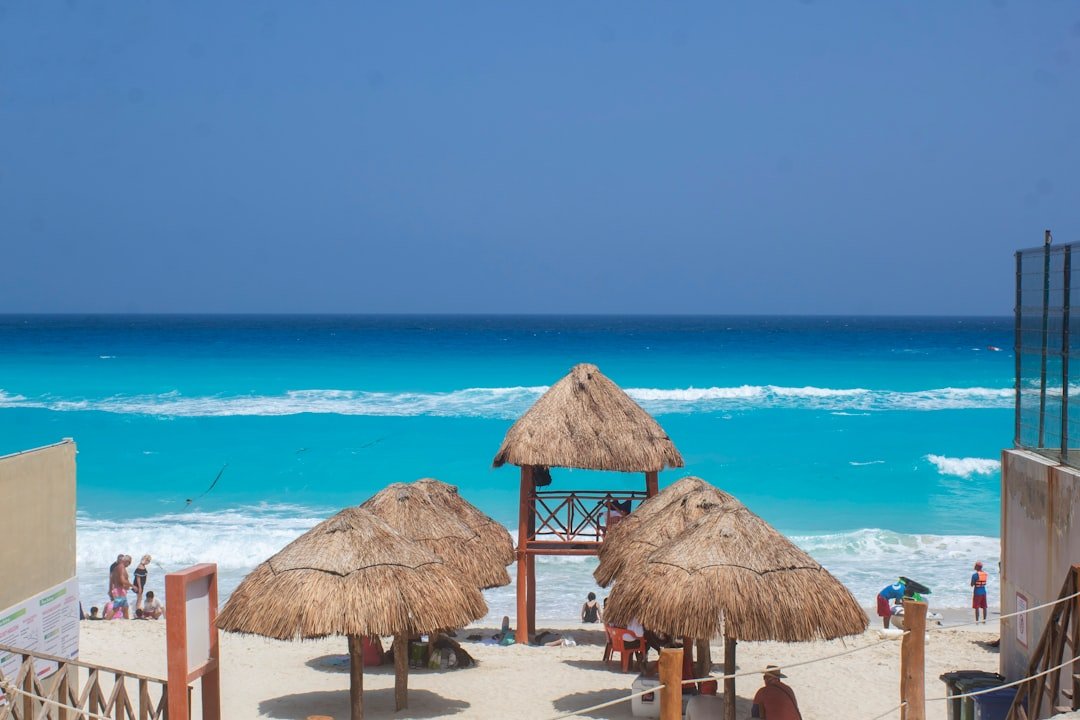
Cost of Living in Cancun Mexico 2026
A retired couple can live comfortably in Cancun on roughly $2,400 to $3,200 monthly—nearly 35% less than they’d spend in Miami or San Diego—making Mexico’s Caribbean coast one of North America’s most affordable upscale destinations. Last verified: April 2026.
Executive Summary
| Category | Monthly Cost (USD) | Annual Cost (USD) | Notes |
|---|---|---|---|
| Rent (1-bed apartment, mid-range area) | $600–$900 | $7,200–$10,800 | Downtown or Playa del Carmen typically 15–20% higher |
| Groceries for one person | $250–$350 | $3,000–$4,200 | Local markets cheaper; international brands cost 25–40% more |
| Utilities (electricity, water, internet) | $120–$180 | $1,440–$2,160 | Air conditioning drives summer bills to $200+ |
| Dining out (casual meals) | $400–$600 | $4,800–$7,200 | Tourist zones mark up 40–60% vs. local restaurants |
| Transportation | $40–$80 | $480–$960 | Public buses cheapest; car rental $30–$50 daily |
| Healthcare (without insurance) | $150–$300 | $1,800–$3,600 | Private clinics 50% cheaper than US; doctors speak English |
| Entertainment & miscellaneous | $200–$350 | $2,400–$4,200 | Beach activities, cultural events, personal items |
| Total estimated monthly budget | $1,760–$2,810 | $21,120–$33,720 | Comfortable lifestyle for singles or couples |
How Cancun Stacks Against Other Retirement Hotspots
Cancun’s position as a major Caribbean resort destination masks what’s become a genuinely affordable retirement market for North Americans. The city draws roughly 5.2 million international visitors annually, yet permanent residents discover living costs that sit 32% below Panama City and 28% below Puerto Vallarta. The difference hinges on supply—Cancun built its infrastructure for tourism, which means abundant rental stock, competitive services, and multiple vendors for nearly everything expats need.
Housing dominates the budget for most people, and here Cancun delivers flexibility. A furnished one-bedroom apartment in downtown areas like Tulum or near the Hotel Zone runs $600 to $900 monthly. Move to outlying neighborhoods like Cancun City proper—where actual Mexican families live—and you’ll find two-bedroom places for $500 to $700. The catch: farther from beaches means longer commutes, though locals accept this trade gladly. Beachfront or Resort Boulevard properties command $1,400 to $3,000 monthly and attract affluent remote workers rather than budget-conscious retirees.
Food costs tell another story. A single person shopping at local mercados (markets) and chains like Soriana or Walmart spends roughly $250 to $350 monthly on groceries. That number climbs 35% to 40% if you stick exclusively to expat-oriented supermarkets and imported brands. Fresh seafood costs roughly 60% less than US prices—whole red snapper runs about $4 per pound at dock-adjacent vendors—while chicken breast hovers around $3 per pound. The real savings emerge for those willing to adapt. Eating where locals eat (tacos from street stands, comida corrida lunch specials) can cut food budgets to $120 to $180 monthly, though that requires comfort with Spanish and risk tolerance for unfamiliar ingredients.
Utilities present a significant variable depending on season and cooling habits. Summer months (May through September) see electric bills spike to $180 to $280 for apartments running air conditioning constantly—Cancun’s humidity averages 77% year-round, making AC almost mandatory. Winter cooling drops bills to $60 to $100. Internet costs roughly $35 to $60 monthly for reliable broadband from providers like Telmex or Izzi, speeds typically 30–100 Mbps. Water remains cheap at $10 to $20 monthly, though expats often buy bottled water ($0.50 per five-liter jug at markets) for drinking and cooking.
Regional Price Breakdown: Where Your Money Goes Furthest
| Neighborhood/Area | Rent (1-bed, USD/month) | Cost of Living Index | Best For | Drawbacks |
|---|---|---|---|---|
| Downtown Cancun (El Centro) | $500–$750 | 85 | Budget retirees, Spanish speakers, local culture | Farther from beach, noisier, fewer English speakers |
| Playa del Carmen | $800–$1,300 | 110 | English-speaking expats, walkable town center | 15–25% pricier than Cancun proper; crowded in season |
| Tulum | $700–$1,200 | 108 | Digital nomads, artistic community, beach access | Smaller job market, limited healthcare options |
| Hotel Zone (Cancun) | $1,400–$3,000 | 140 | Luxury remote workers, all-in-one resort lifestyle | Tourist pricing, isolation from local culture, car dependent |
| Isla Mujeres | $900–$1,400 | 115 | Quiet island living, tight expat community | Ferry costs ($3 round-trip), limited nightlife, higher food prices |
Downtown Cancun (El Centro) represents the true budget option, where the city’s cost-of-living index sits 15 points below the Hotel Zone. Monthly expenses for a modest lifestyle here—apartment, meals at local restaurants, public transport—average $1,400 to $1,800. The trade is cultural immersion. You’ll shop alongside retirees from Mexico City, navigate menus in Spanish, and experience authentic seaside life rather than curated tourism.
Playa del Carmen, 45 kilometers south, charges a 20% premium across every category. Rent climbs to $800 to $1,300, meals at tourist restaurants average $12 to $18 (versus $6 to $10 downtown), and imported groceries cost 30% more. The town compensates with a thriving English-speaking community, walkable streets, and cultural events. For those unwilling to adapt linguistically or culturally, Playa del Carmen’s extra expense feels justified. Tulum, another 45 kilometers south, occupies middle ground—slightly cheaper than Playa yet costlier than Cancun, with reputation as a digital-nomad haven that’s gentrified considerably since 2020.
Key Factors Shaping Your Actual Costs
1. Currency Fluctuations and Peso Strength
The Mexican peso traded at approximately 17.2 to 18.1 USD in April 2026, a range that dramatically affects retiree purchasing power. A 5% swing in exchange rates translates to roughly $100 to $150 monthly on a typical budget. Those receiving fixed US dollar incomes (Social Security averaging $1,843 monthly for retired workers) see immediate gains during peso weakness but vulnerability during strength. Smart retirees maintain dual accounts or use international money transfer services like Wise (formerly TransferWise), which charged roughly 0.5% to 1% fees versus traditional banks’ 2.5% to 3.5%. Timing monthly transfers during favorable rates can save $400 to $600 annually on standard expenses.
2. Healthcare: A Surprising Cost Advantage
Healthcare costs in Cancun run 45% to 55% below US prices without sacrificing quality. A routine doctor visit costs $40 to $70 (versus $150 to $300 in the US), while dental cleanings run $30 to $50 compared to $120 to $200 stateside. A cardiologist consultation—including EKG and blood work—totals roughly $150 to $200. Expats typically choose between two paths: enrolling in Mexican social security (IMSS) costing roughly $450 annually for non-working residents, or using private clinics directly. Many opt for a hybrid approach, maintaining US Medicare while handling routine care locally. Complex surgeries (orthopedic, cardiac) still occur cheaper in Mexico—hip replacements run $15,000 to $22,000 versus $35,000 to $50,000 in America—drawing medical tourists from across North America.
3. Seasonality’s Dramatic Impact
Cancun operates on two pricing calendars. High season (November through April) sees rent increase 15% to 25%, restaurant prices jump 20% to 30%, and hotel rates triple or quadruple. Low season (May through October) offers 20% to 40% discounts on short-term rentals, fewer tourists clogging beaches, and negotiable long-term leases. A retiree paying $750 monthly for a one-bedroom apartment in May might face $950 in January. Utility costs swing wildly too—AC consumption during summer can push electricity bills to $200 to $280 versus $60 to $100 in winter. Those flexible with travel timing realize 25% to 35% annual savings by choosing low season.
4. Transportation Costs: Minimal If You Plan Right
Cancun’s public bus system charges 13 Mexican pesos (roughly $0.75 USD) per ride using the Tarjeta Maya rechargeable card. Monthly passes cost about $20 to $25 for unlimited city travel. Most retirees spending $40 to $80 monthly on transportation use buses for daily errands while occasionally splurging on taxis ($1.50 to $3 per kilometer) for evening outings. Car ownership adds $300 to $500 monthly (insurance, fuel, maintenance) plus navigating chaotic traffic—unnecessary for those content with bus, taxi, or occasional Uber ($2.50 to $8 per trip). Rental cars for weekend trips to cenotes or Tulum cost $30 to $50 daily through local agencies, undercutting tourist-zone vendors by 40%.
5. Visa Requirements and Legal Residency Costs
Mexico’s Temporary Resident visa—the pathway for most retirees—requires proving $2,700 in monthly income or $54,000 in savings (adjusted annually for inflation, now roughly $61,200 as of April 2026). The application itself costs $200 to $400 through immigration attorneys, who handle the bureaucratic maze for most expats. Once approved (renewable annually), the visa carries no ongoing fees beyond tourist taxes. Permanent residency ($45,000 minimum balance requirement) proves worthwhile for those planning decades in Mexico, as it eliminates annual renewals and opens business opportunities. These upfront legal costs rarely factor into monthly budgets but should inform the decision calculus—the average American retiree spends $400 to $600 on visa-related expenses annually.
How to Use This Data for Your Situation
Calculate Your Personal Budget with Precision
Take the executive summary table’s minimum figures ($1,760 monthly) and adjust upward based on your lifestyle. If you currently spend $50 per week on groceries in the US, expect $15 to $25 weekly in Cancun using markets but eating locally. If you dine out five times weekly, budget $400 to $500 monthly rather than the $400 to $600 shown—locals eat cheaper than tourists. If you require ongoing medical care (diabetes management, thyroid medication), budget additional dollars, though expect 40% to 50% savings versus US costs. Use this formula: (baseline expense) × (Cancun adjustment factor) + (unique personal needs) = realistic monthly cost.
Factor in Your Income Type and Stability
Those living on fixed Social Security income ($1,800 to $3,500 monthly for most US retirees) fit comfortably within Cancun’s $2,000 to $2,800 comfortable range with modest adjustment. Remote workers earning variable income should maintain a 6-month emergency fund in Mexican pesos and another 6 months in USD, protecting against currency volatility and unexpected cost increases. Couple this with a strategy: live 25% below your means during high-earning months, allowing flexibility during slower periods. The city’s competitive market means landlords offer incentives—negotiate 6-month or 12-month leases for 10% to 15% reductions.
Visit Before Committing—Test Your Budget
Rent a two-week apartment in your target neighborhood ($1,200 to $1,800 for two weeks) and live identically to how you’d live permanently. Eat at the restaurants where you’d normally eat, use the transportation you’d actually use, and purchase at the markets where you’d shop. This real-world test typically reveals $200 to $400 monthly adjustments from theoretical estimates—some discover they’re spenders who’ll need $3,200 monthly, others realize they’re comfortable at $1,800. The rental experiment costs $600 to $900 upfront but prevents far costlier relocation mistakes.
Frequently Asked Questions
Can you really live on $1,500 monthly in Cancun?
Yes, but with constraints. A $1,500 monthly budget requires living downtown (not beachside), cooking 80% of meals from markets, using public transit exclusively, and accepting apartment amenities below North American standards. Single expats achieve this regularly; couples find it tight. The catch lies in lifestyle trade-offs—minimal dining out, no air-conditioned comfort during peak summer, and cultural adaptation. Those seeking $1,500 budgets typically combine Mexico residency with visits to family (reducing local spending) or seasonal income from remote work.
What healthcare coverage do expats typically need?
Most expats maintain US Medicare (if eligible) while using private clinics in Cancun for routine care, creating a hybrid system. Mexican private health insurance runs $800 to $2,000 annually depending on age and coverage level, far cheaper than US counterparts. Those under 60 often skip insurance entirely, paying out-of-pocket for the cheap routine care, with catastrophic coverage through US insurers. The critical factor: ensure your US health insurance (if maintaining it) covers medical evacuation to the US in worst-case scenarios—roughly $250,000 to $500,000 for air ambulance transport.
How does renting versus buying compare financially?
Purchasing property in Mexico as a foreigner requires establishing a bank trust (fideicomiso) and navigating legal complexities—adding $3,000 to $8,000 in legal fees. A beachfront condo runs $300,000 to $600,000 in Cancun or Playa del Carmen. Mortgages exist but carry 7% to 10% interest rates (versus 3% to 5% in the US), making purchases viable primarily for all-cash buyers. The mathematics favor renting unless you’re staying 15+ years or expecting property appreciation. A $1,200-per-month rental costs $14,400 annually ($216,000 over 15 years); a $400,000 property costs roughly $28,000 annually in taxes, insurance, and maintenance, plus potential 3% annual value increases. For shorter horizons (5–10 years), renting wins decisively.
What’s the biggest hidden cost expats overlook?
Taxes trip up many newcomers. Mexico requires reporting worldwide income, with progressive rates reaching 35% on higher earners (though significant exemptions exist for certain income types). US citizens still owe US federal taxes with a Foreign Earned Income Exclusion of roughly $120,000, but filing complexity increases. Property taxes run roughly 0.1% of assessed value annually—minimal but unexpected. Travel expenses back to the US (flights averaging $400 to $700 round-trip) add up if you visit family twice yearly. Most underestimate these by $3,000 to $5,000 annually, discovering mid-year that their $2,500 budget leaves little room for taxes, travel, or home-country obligations.
Is Cancun getting more expensive, and should I move soon?
Cancun’s costs rose roughly 8% to 12% annually from 2020 through 2025, driven by tourism recovery and infrastructure investment (new highway, expanded airport, Maya Train extension completed). However, this pace slowed to 4% to 6% annually by April 2026 as market saturation set in. Rent increases cluster in tourist zones (Hotel Zone, Playa del Carmen) at 6% to 8% yearly, while downtown areas rise 2% to 4% annually. Relative to US inflation averaging 2.8% annually, Cancun still gains cost advantage. Those waiting for prices to drop will wait indefinitely; those moving now lock into rates ahead of continued modest appreciation. The strategic move targets