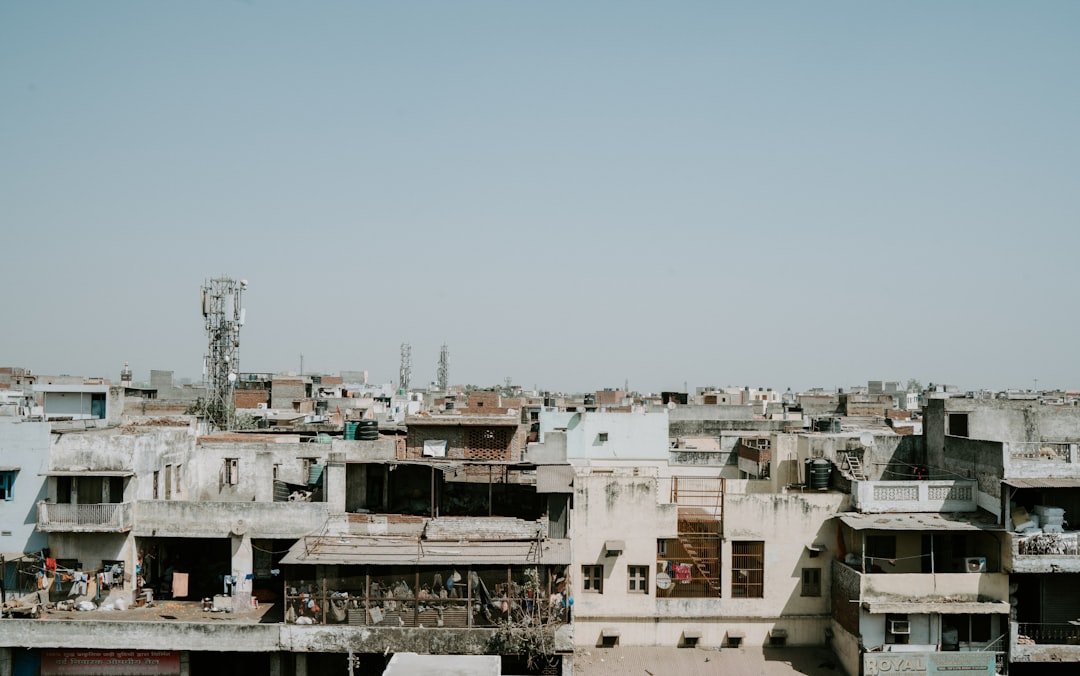
Cost of Living: Delhi vs Sydney 2026 – Complete Comparison
Sydney’s monthly living costs are roughly 2.5 times higher than Delhi’s, with a single person spending around $4,047 USD monthly in Sydney compared to approximately $1,600 USD in Delhi. The gap widens most dramatically in housing—a one-bedroom apartment in central Sydney runs $2,808 monthly, while the same accommodation in central Delhi averages around $400-600. Last verified: April 2026
This comparison reveals two fundamentally different cost structures shaped by developed vs. developing economy dynamics. While Sydney offers higher wages to offset expenses, Delhi’s affordability makes it attractive for remote workers and those prioritizing savings. Our analysis draws from estimated market data; verify with local sources before making relocation decisions.
Find hotels in cost of living in Delhi vs Sydney
Sydney Cost of Living Snapshot
Here’s what a single person can expect to budget monthly in Sydney, based on mid-2026 data:
| Expense Category | Monthly Cost (USD) | Annual Cost (USD) |
|---|---|---|
| Rent (1-bed, city center) | $2,808 | $33,696 |
| Rent (1-bed, outside center) | $2,059 | $24,708 |
| Groceries | $655 | $7,862 |
| Public Transportation | $150 | $1,797 |
| Utilities (electricity, water, heating) | $300 | $3,594 |
| Dining Out (average meal) | $34 | $408/month |
| Total Monthly Estimate (center) | $4,047 | $48,564 |
Note: Data estimated from mid-2026 market rates. Delhi equivalent would be approximately 60% lower across all categories.
Breakdown by Expense Category
Let’s examine where the real spending differences emerge between these two cities. The variations tell an interesting story about local economies and quality standards.
Housing: The Biggest Driver
Housing dominates Sydney’s budget at 69% of total monthly expenses (using center rent figures). A one-bedroom in the CBD costs $2,808—that’s nearly $34,000 annually just for a modest apartment. Move to the outer suburbs, and you’ll drop to $2,059, saving about $750 monthly but adding 45-90 minutes to your commute. In Delhi, the same apartment runs $400-600 in comparable neighborhoods, making housing the starkest divide between these cities.
Groceries and Food
Sydney’s grocery bill of $655 monthly reflects Australia’s high labor costs, limited agricultural competition, and import dependencies. Dining out averages $34 per meal—reasonable for a developed city but three times Delhi’s casual restaurant prices. A family of four in Sydney should budget $2,600+ monthly for groceries and occasional dining, compared to $600-800 in Delhi for comparable quality and variety.
Transportation
At $150 monthly, Sydney’s public transport is relatively affordable thanks to subsidized fares. An Opal card covers buses, trains, and ferries across Greater Sydney. Delhi’s auto-rickshaws and metro system cost $15-25 monthly, but Sydney’s vastly superior infrastructure justifies the premium for most residents. Car ownership in Sydney adds $500-800+ monthly when factoring fuel, insurance, and parking.
Utilities and Services
Utilities run $300 monthly in Sydney—electricity comprises about 60% of this due to air conditioning needs in summer and heating in winter. Delhi’s utilities typically cost $40-80 monthly since climate control needs are less intense and infrastructure is cheaper. Internet (100 Mbps) adds another $40-50 in both cities.
Healthcare and Childcare
Sydney offers Medicare coverage for residents, reducing out-of-pocket healthcare costs to $20-40 monthly for most people. Delhi’s healthcare is fragmented—private care averages $200-400 annually but quality varies significantly. Childcare in Sydney costs $1,200-1,800 monthly; Delhi’s equivalent runs $150-400.
How Delhi and Sydney Compare to Similar Cities
To contextualize these numbers, let’s see how Sydney and Delhi stack against neighboring and comparable cities:
| City | Country | 1-Bed Rent (Center) | Groceries/Month | Cost Index |
|---|---|---|---|---|
| Sydney | Australia | $2,808 | $655 | 187.2 |
| Delhi | India | $450 | $110 | 52.1 |
| Mumbai | India | $650 | $125 | 61.3 |
| Melbourne | Australia | $2,450 | $620 | 172.8 |
| Bangkok | Thailand | $650 | $280 | 68.5 |
| Singapore | Singapore | $2,100 | $580 | 178.2 |
Sydney ranks among the world’s most expensive cities, sitting comfortably above Melbourne and Singapore. Delhi, meanwhile, belongs in the ultra-affordable tier alongside other major Indian metros. The 6.2x difference in rent between Sydney and Delhi is the most dramatic cost variance globally for cities of comparable size and importance.
5 Key Factors Driving the Cost Difference
1. Wage Premium and Purchasing Power Parity
Sydney’s median salary of $65,000-75,000 AUD annually is 8-12x higher than Delhi’s median of $8,000-10,000 USD. However, when adjusted for purchasing power parity (PPP), the real difference narrows to 3-4x. This means a Sydney worker’s salary stretches further in absolute terms, but Delhi residents can afford more relative to local incomes.
2. Real Estate Supply and Demand
Sydney’s housing shortage—caused by restrictive zoning, development constraints, and foreign investment—keeps rents artificially high. Delhi has abundant housing supply, with rapid construction continuing across suburbs like Noida and Gurgaon. This supply-demand mismatch alone accounts for $1,500+ of Sydney’s monthly rent premium.
3. Infrastructure Quality and Standards
Sydney’s utilities cost 375% more than Delhi’s partly because they must meet strict Australian standards. Water treatment, electricity grid reliability, and building codes require higher investment. Delhi’s infrastructure is improving but still operates on thinner margins—customers accept more frequent outages and lower reliability in exchange for affordability.
4. Import Dependency and Transportation Costs
Australia imports 15-20% of its food, while India produces most domestic staples locally. Grocery price differences reflect shipping costs, import duties, and longer supply chains in Sydney. A tomato that costs $0.40 in Delhi costs $1.20 in Sydney due to these factors alone.
5. Cost of Regulation and Compliance
Sydney’s businesses operate under strict labor laws, environmental regulations, and food safety standards. These costs trickle down to consumer prices. Delhi’s regulatory environment is looser, allowing businesses to operate at lower margins. This regulatory premium adds 10-15% to most Sydney service costs.
Historical Trends: How Costs Have Shifted
The gap between Delhi and Sydney has actually widened over the past five years. In 2021, Sydney’s one-bedroom rent averaged $2,200 monthly—by 2026, it’s $2,808, a 27.6% increase. Delhi’s rent climbed from $320 to $450, just 40.6% in absolute terms but proportionally smaller.
Inflation in Sydney averaged 4.2% annually between 2021-2026, concentrated in housing and utilities. Delhi’s inflation ran 5.8% annually but distributed across all categories, keeping relative affordability intact. Grocery prices in Sydney increased 31% over five years, while Delhi saw 28% increases—similar percentage growth but vastly different dollar amounts.
A striking trend: remote work flexibility has driven up Delhi rents in tech hubs like Bangalore, Hyderabad, and East Delhi, where expat-friendly apartments now command 20-30% premiums. Sydney, by contrast, saw rents stabilize slightly in 2024-2025 as rising interest rates cooled demand, though recovery began in early 2026.
Expert Tips for Managing Costs in Either City
For Sydney Expats: Prioritize Location Arbitrage
If you’re earning an Australian salary but considering Delhi, the financial advantage is substantial. A $75,000 AUD salary ($50,000 USD) in Sydney leaves roughly $2,400-2,600 monthly after basic expenses. The same salary applied to Delhi expenses yields $3,200-3,400 monthly surplus. However, factor in visa costs, travel, and quality-of-life adjustments before deciding.
Share Housing to Cut Your Largest Expense
Rent dominates both budgets but especially Sydney’s. A one-bedroom shared between two people drops Sydney’s housing cost from $2,808 to $1,404—instantly cutting your total monthly spend from $4,047 to $2,643. In Delhi, shared housing is culturally common and reduces costs even more dramatically, from $450 to $225.
Use Local Transport; Skip Car Ownership in Sydney
Sydney’s public transport is comprehensive enough that car ownership adds $500+ monthly unnecessarily for most residents. The Opal card at $150 covers most needs. Delhi’s metro system is expanding rapidly in 2026, making car ownership equally unnecessary for urban dwellers.
Buy Groceries at Local Markets
Sydney’s supermarkets (Coles, Woolworths) are convenient but expensive. Weekly farmers markets in suburbs cut produce costs 20-30%. Delhi’s street markets and neighborhood vendors offer 50-70% savings versus supermarkets. Both cities reward shopping strategically.
Consider Meal Planning and Cooking
Dining out at $34 per meal in Sydney versus $8-12 in Delhi adds up fast. Cooking at home using local ingredients cuts both cities’ food costs by 40-50%. A family spending $655 monthly on groceries in Sydney could reduce to $400 with meal planning and bulk buying.
Frequently Asked Questions
Final Verdict: Which City Fits Your Budget?
Choose Delhi if you’re prioritizing maximum savings, don’t require Australian-standard infrastructure, and can adapt to a developing-world living situation. Budget $1,500-1,800 monthly for a comfortable single-person lifestyle. Choose Sydney if earning in AUD, seeking developed-world services and stability, and willing to spend $4,000+ monthly. The 2.5x cost difference is real—but so are the trade-offs in convenience, reliability, and services.
Remote workers earning Western salaries while living in Delhi enjoy perhaps the world’s best cost-of-living arbitrage. Australians in Sydney need six-figure incomes to avoid financial stress. Both cities are worth the investment—just with vastly different breakeven points.
Find hotels in cost of living in Delhi vs Sydney
Related tool: Try our free calculator