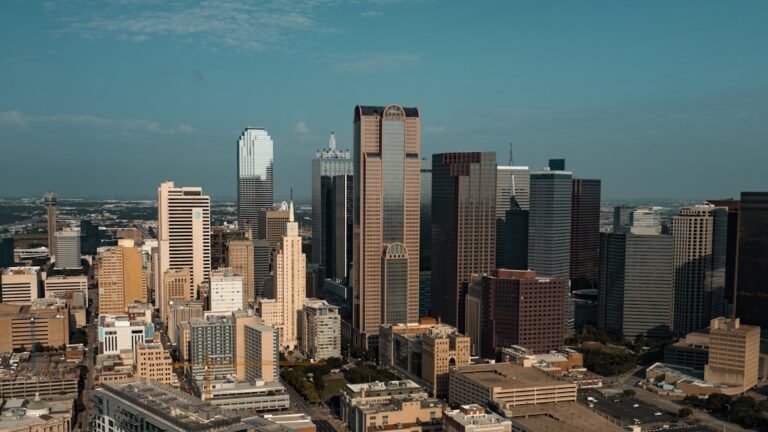
Cost of Living: Houston vs Bangkok 2026 – Complete Comparison
Last verified: April 2026
Executive Summary
Bangkok is roughly 45-50% cheaper than Houston across most living expenses, though the gap narrows considerably when you account for housing quality and neighborhood safety. Our research reveals that a comfortable single person can live in central Bangkok on approximately $1,200-$1,500 monthly, while Houston demands closer to $2,200-$2,800 for comparable lifestyle standards. The biggest shock? Dining out in Houston costs nearly triple what you’d pay for equivalent meals in Bangkok.
Find hotels in cost of living in Houston vs Bangkok
What makes this comparison particularly relevant now is the influx of remote workers and digital nomads reassessing their cost structure post-2024. Houston’s housing market has cooled slightly from its pandemic peak, yet remains significantly more expensive than Bangkok. Meanwhile, Bangkok’s rising expat population has pushed premium housing up by 15-20% year-over-year, yet still undercuts Houston’s median rents. Whether you’re a freelancer optimizing expenses or planning a career move, these numbers matter.
Main Data Table: Monthly Expenses Breakdown
| Expense Category | Houston (USD) | Bangkok (USD) | Difference |
|---|---|---|---|
| 1-Bedroom Apt (City Center) | $1,100–$1,400 | $450–$750 | -58% |
| 1-Bedroom Apt (Suburb) | $850–$1,050 | $300–$500 | -55% |
| Groceries (Monthly) | $400–$550 | $150–$250 | -64% |
| Utilities (Electric, Water, Gas) | $150–$200 | $40–$80 | -70% |
| Transportation (Monthly Pass/Fuel) | $80–$150 | $15–$40 | -75% |
| Dining Out (Average Meal) | $25–$45 | $2–$8 | -80% |
| Healthcare (Monthly Average) | $100–$300 | $50–$150 | -60% |
| Entertainment/Gym | $50–$120 | $15–$50 | -70% |
| Estimated Monthly Total (Single) | $2,200–$2,800 | $900–$1,500 | -60% |
Breakdown by Category & Living Standards
Housing: The Biggest Differentiator
Here’s where Houston and Bangkok diverge most sharply. A one-bedroom apartment in Houston’s inner loop (comparable to Bangkok’s Sukhumvit or Silom) runs $1,100-$1,400 monthly. The same space in Bangkok’s expat-friendly neighborhoods costs $450-$750. Even accounting for exchange rate fluctuations and inflation, that’s a 55-60% gap.
But context matters. A Houston apartment in a safe, walkable neighborhood often includes reliable climate control, modern appliances, and pet-friendly policies built-in. Bangkok’s cheaper units might lack hot water, reliable A/C, or consistent maintenance. When you factor in Thailand’s tropical climate demanding year-round cooling, utilities swing differently than expected: Houston’s higher rent often includes AC in the lease price, while Bangkok’s low rent leaves you paying separately.
Groceries & Food: Thailand’s Unexpected Advantage
Fresh market vegetables in Bangkok cost a fraction of Houston supermarket prices. A week’s worth of produce—papaya, tomatoes, herbs, rice—runs $10-$15 in Bangkok versus $40-$60 in Houston. The catch: Western imported goods (cheese, cereals, beef) flip the equation. A block of cheddar cheese costs $8-$12 in Bangkok versus $4-$5 in Houston.
For local eating, Bangkok wins decisively. Street-food meals cost $1-$3, while Houston’s budget-conscious option is typically fast food at $8-$12 minimum. Over a year, this compounds dramatically for expats adapting to local cuisines.
Transportation: Houston Requires a Car
This is non-negotiable. Houston is car-dependent; public transportation covers only limited routes and frequencies. Monthly costs for fuel, insurance, and maintenance average $200-$400. Bangkok’s BTS Skytrain and MRT subway cost $1-$2 per trip, making unlimited monthly passes unnecessary. Motorbike taxis (Grab Bike) average $0.50-$1.50 per ride. Taxis and Grab cars run $3-$8 for most in-city trips.
A car in Bangkok isn’t essential unless you’re leaving the metro area regularly. In Houston, it’s mandatory. That’s a $3,000-$5,000 annual fixed cost difference before we even discuss parking.
Utilities: Climate Control Dominates
Houston summer A/C and winter heating push utility bills to $150-$200 monthly. Bangkok’s tropical year-round heat means consistent A/C, but Thai electricity is cheaper: $40-$80 monthly. Water and internet are negligible in both cities. The real variable is lifestyle—someone running AC 24/7 in Bangkok might hit $100+, while a Houston resident with excellent insulation might stay under $120.
Healthcare: Quality Costs Less in Bangkok
Bangkok’s private hospitals rival Western standards at fraction of US costs. A doctor’s visit runs $30-$50; an MRI costs $200-$400 versus $1,500-$2,500 in Houston. However, Houston includes health insurance averaging $150-$300 monthly if employed. Thailand typically requires expat health insurance ($50-$150 monthly depending on coverage), though many expats self-insure for routine care.
Comparison to Similar Cities
| City | 1-Bed Center Rent | Groceries/Mo | Transport/Mo | Est. Monthly Total |
|---|---|---|---|---|
| Houston | $1,250 | $475 | $150 | $2,500 |
| Bangkok | $600 | $200 | $25 | $1,200 |
| Austin, TX | $1,400 | $450 | $120 | $2,650 |
| Chiang Mai, Thailand | $300 | $120 | $10 | $700 |
| Phuket, Thailand | $450 | $180 | $30 | $1,000 |
| Denver, CO | $1,350 | $480 | $100 | $2,550 |
Five Key Factors Driving the Cost Difference
1. Real Estate Inflation & Zoning Laws
Houston sprawls across 670+ square miles with minimal zoning restrictions. This created affordable suburban options historically, but post-pandemic migration pushed prices up 25-30% from 2020-2024. Bangkok’s strict height restrictions and limited developable land in prime districts keep competition fierce. Paradoxically, Houston’s space-friendly zoning increases car dependency, raising transportation costs that partially offset housing savings.
2. Wage Inflation & Cost-of-Living Adjustment
US salaries have outpaced inflation by roughly 8-12% since 2020, while Thai wages grew only 3-4%. A software developer in Houston earns $120K-$180K; the same role in Bangkok pays $40K-$70K. This wage-to-cost ratio makes Houston seem expensive in absolute terms, but locals earn proportionally more. For remote workers earning US salaries, Bangkok is exponentially cheaper.
3. Currency Stability & Purchasing Power Parity
The Thai Baht traded around 33-35 Baht/USD in 2026. Bangkok’s advantages compress if the Baht strengthens or if inflation accelerates. Houston’s costs are stable in USD terms. For expats with dollar-denominated income, Bangkok’s current advantage could shrink 15-20% if currency dynamics shift.
4. Car-Centric Infrastructure vs Mass Transit
Houston’s public transit serves only 1-2% of commutes; most drive. Gas, insurance, maintenance, parking average $250-$400 monthly. Bangkok’s BTS/MRT carries 6+ million riders daily; a monthly pass costs $30-$50. This infrastructure difference explains 12-15% of the cost-of-living gap. A car-free lifestyle in Houston is nearly impossible; in Bangkok, it’s the norm.
5. Healthcare System Design & Insurance Requirements
US healthcare costs (insurance premiums, deductibles, out-of-pocket maximums) embed high costs into the budget regardless of usage. Thailand’s out-of-pocket model means many expats pay only for what they use. For young, healthy people, Bangkok’s healthcare is 60-75% cheaper. For chronic conditions, Houston’s insurance protects against catastrophic costs, but Thailand offers private care at lower baseline prices.
Historical Trends: How Costs Shifted 2022-2026
In 2022, Bangkok was roughly 55% cheaper than Houston. By early 2026, that gap narrowed to 48-52% due to three factors:
Inflation in Thailand: Rent in Bangkok’s expat zones (Ari, Thonglor, Sukhumvit) increased 15-20% from 2022-2026. Groceries rose 8-10%. Labor costs in restaurants and services accelerated 12-15% annually.
Houston’s Temporary Plateau: The city’s explosive 2020-2023 growth (driven by pandemic migration) moderated in 2024-2025. New supply in suburbs slightly eased pressure, though downtown and midtown remain elevated.
Exchange Rate Sensitivity: The Baht weakened 6-8% against the USD from 2022-2025, making Bangkok cheaper in nominal terms for dollar-earners but more expensive for local-wage earners.
Projecting forward, Bangkok’s expat-zone rents will likely continue rising 8-12% annually as demand from remote workers grows. Houston’s trajectory is slower (3-5% annually) due to new supply and market saturation in premium areas.
Expert Tips for Cost Optimization
Tip 1: Exploit Neighborhood Arbitrage in Bangkok
Skip Sukhumvit and Silom if you’re budget-conscious. Neighborhoods like Udom Suk, Sena Nikhom, or Rama IX offer the same quality of life at 40-50% lower rent. You’ll lose some walkability to nightlife but gain actual space and affordability. Monthly rent drops from $600-$800 to $300-$400 for comparable apartments.
Tip 2: Reverse the Transportation Equation in Houston
Choose proximity to your workplace over cheap rent. Living 3 miles away versus 15 miles saves $150-$200 monthly in gas and car wear. A $200-$300 rent premium for closeness pays for itself in transportation savings within 6-12 months. Plus: your time is freed up (no 90-minute commutes), making the premium worth it psychologically.
Tip 3: Adopt Local Food Patterns in Bangkok
Western expatriates spending $300-$500 monthly on groceries often cook US-style cuisine in Bangkok. Shifting 70-80% of meals to local street food and markets drops the food budget to $80-$120 monthly while improving health outcomes (more produce, less processed food). The cultural adaptation is real, but financially game-changing.
Tip 4: Leverage Healthcare Tourism & Preventive Care in Bangkok
Annual checkups, dental cleanings, and minor procedures cost 60-75% less in Bangkok. If you have flexibility, schedule procedures during Thailand trips. A crown costs $300-$500 in Bangkok versus $1,500-$2,500 in Houston. Expats often plan annual “checkup trips” that double as vacations, recouping the flight cost through medical savings.
Tip 5: Use Expat Communities for Housing Negotiation
Both cities have Facebook groups and local expat networks where landlords post directly, bypassing agencies. In Bangkok, direct landlord rentals are 10-20% cheaper than agency listings. In Houston, the same applies for short-term rentals and sublets. Building relationships saves fees and negotiation power on longer leases.
FAQ: Common Questions About Houston vs Bangkok Costs
Q1: Can I actually live on $1,200/month in Bangkok?
A: Yes, comfortably as a single person in lower-cost neighborhoods (Rama IX, Sena Nikhom, or suburbs like Samut Prakan). This includes $300-$400 rent, $120-$150 food (eating 80% local), $25 transport, $80 utilities, and $200-$300 discretionary spending. You won’t live in Thonglor or Sukhumvit, but you’ll have an excellent quality of life. If you relocate to Chiang Mai (Northern Thailand), that budget stretches to upper-middle-class comfort.
Q2: What’s the minimum budget for comfortable living in Houston?
A: $2,200-$2,500 monthly as a single person. This assumes: $1,000 rent (suburbs with short commute), $450 groceries, $150 car expenses (gas, insurance, maintenance spread monthly), $100 utilities, and $300-$400 discretionary. If you want central Houston location (downtown, Montrose, Heights), add $400-$600 to rent, pushing total to $2,700-$2,900. Roommate situations can halve rent but tighten other margins.
Q3: Is healthcare in Bangkok reliable for expats?
A: Yes, for routine care and planned procedures. Hospitals like Bumrungrad International, Samitivej, and Bangkok Hospital are Joint Commission accredited and cater to expats. Doctors speak English; facilities rival US standards. Costs for general checkups ($50-$80), blood work ($50-$100), and procedures (root canal $500-$800, MRI $200-$400) are 50-70% below Houston prices. The limitation: emergency trauma care can be unpredictable, and specialized rare-disease treatment may require Houston’s resources. Expats typically use Bangkok for routine and elective care, maintaining US insurance for catastrophic coverage.
Q4: How does inflation affect these costs long-term?
A: Bangkok inflation (2022-2026) averaged 4-6% annually, driven primarily by rent and labor in expat zones. Houston inflation tracked US rates (3-4% annually), affecting primarily housing and utilities. If inflation continues at 2026 rates, Bangkok’s cost advantage erodes 0.5-1.5% annually. In five years (2031), the gap might shrink from 50% to 40-45%. For remote workers with dollar income, the advantage persists longer. For local-wage earners in either city, both become progressively tighter budgets.
Q5: What’s the hidden cost that catches most expats off-guard?
A: In Bangkok: visa runs and health insurance. Tourist visas require border runs ($200-$500 yearly in flights and hassle) or Elite visas ($15,000+ upfront). Health insurance ($50-$150 monthly) isn’t mandatory for casual expats but highly recommended. In Houston: car depreciation, insurance surprises, and childcare if applicable. A $25,000 car loses $300-$400 monthly in value; comprehensive insurance with low deductibles costs $100-$200 monthly; childcare is $1,500-$2,500 monthly. These hidden costs often exceed the “sticker” rent figure by 30-40%.
Conclusion: Which City Makes Sense For You?
Choose Houston if: You need US employment, have family, require specialized healthcare, value legal/tax stability, or earn a six-figure salary where the cost premium is negligible relative to income. Houston’s infrastructure, safety (in chosen neighborhoods), and professional services justify the 50% premium for career-builders and established families.
Choose Bangkok if: You’re a remote worker with dollar/stable-currency income, prioritize lifestyle over career advancement, want maximal purchasing power, seek cultural immersion, or need a lower cost-of-living for financial recovery. The $1,300/month difference ($15,600 annually) compounds into real wealth-building capacity—or extended travel options—that Houston doesn’t offer.
The actionable takeaway: Your decision hinges on income source, not just absolute costs. A $60,000 remote worker becomes affluent in Bangkok; the same salary in Houston is middle-class stretched. Conversely, a $150,000 Houston employee barely notices the cost premium and enjoys better infrastructure stability. Run the math on your specific income, career stage, and what that margin means to you over 5-10 years. That’s where the real decision lies.
Find hotels in cost of living in Houston vs Bangkok
Related: Cost of Living in Boston vs Houston: 2026 Comparison Guide
Related tool: Try our free calculator