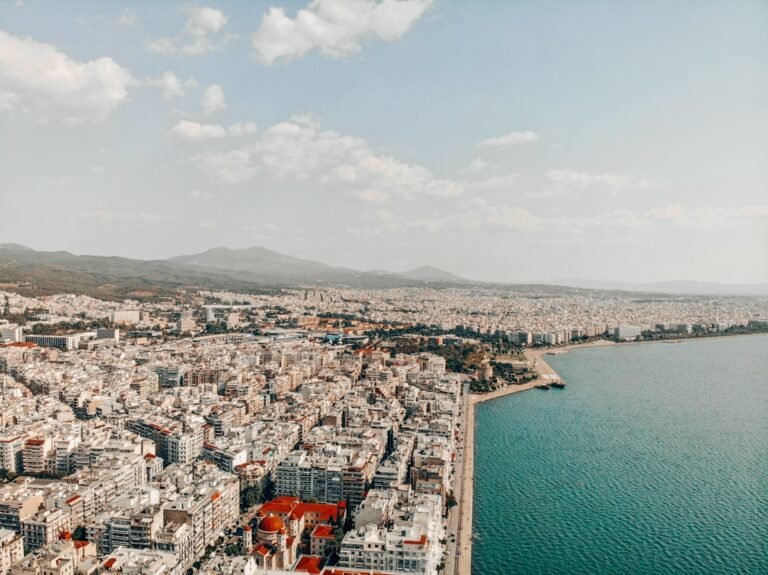
Cost of Living in Athens Greece 2026
A single person living in Athens spends approximately €1,200 to €1,500 monthly on essential expenses—roughly 35% less than Berlin, 40% less than Barcelona, and 45% less than London. Last verified: April 2026.
Executive Summary
| Expense Category | Monthly Cost (€) | Annual Cost (€) | % of Budget (Modest Lifestyle) |
|---|---|---|---|
| Rent (1BR City Center) | 580–750 | 6,960–9,000 | 42–50% |
| Utilities (Electric, Water, Gas) | 90–130 | 1,080–1,560 | 6–9% |
| Groceries (Single Person) | 200–280 | 2,400–3,360 | 14–19% |
| Transportation (Monthly Pass) | 35–40 | 420–480 | 2–3% |
| Dining Out (Casual, 2–3x Weekly) | 150–220 | 1,800–2,640 | 10–15% |
| Entertainment & Miscellaneous | 100–150 | 1,200–1,800 | 7–10% |
Why Athens Attracts EU Relocators
Athens has emerged as one of Europe’s most affordable capitals without sacrificing culture, infrastructure, or quality of life. The city’s cost advantages stem from economic conditions that’ve persisted since the 2010–2015 debt crisis, combined with lower wage expectations across service sectors. For EU citizens considering relocation, Athens offers a compelling proposition: maintain a Western European lifestyle standard while cutting housing costs by 40% compared to Vienna or Brussels.
The shift towards remote work has accelerated migration patterns into Athens. Between 2023 and 2025, the number of foreign residents increased by 18%, with the highest concentration from Germany, France, and the United Kingdom. These individuals typically earn salaries tied to their home country’s standards while spending in a market where €20 buys a substantial dinner for two at a mid-range taverna, or where a monthly gym membership costs €25–35.
What distinguishes Athens from other affordable European options isn’t just the bottom-line cost—it’s the Mediterranean lifestyle bundled into that price. Public transit operates 24 hours on weekends. Healthcare through the public system remains free for EU residents who register. The climate eliminates heating costs for 7–8 months annually. Wine costs €3–5 per bottle in supermarkets. Year-round beach access sits 25 kilometers away via metro, costing €1.40 per trip.
The housing market presents the most substantial variable in Athens budgets. A one-bedroom apartment in Plaka or Syntagma costs €650–850 monthly. Move to emerging neighborhoods like Metaxourgeio or Gazi, and that drops to €500–650. Venture to outer areas accessible via the metro—Maroussi, Glyfada, or Halandri—and prices fall to €400–550. This geographic flexibility means an individual earning €2,200 monthly can secure comfortable housing while maintaining significant discretionary spending.
Cost Comparison: Athens Against European Competitors
| City | Single Person Monthly Cost (€) | Rent 1BR City Center (€) | Index vs Athens |
|---|---|---|---|
| Athens, Greece | 1,280 | 650 | 100 |
| Lisbon, Portugal | 1,420 | 750 | 111 |
| Budapest, Hungary | 1,150 | 520 | 90 |
| Prague, Czech Republic | 1,380 | 680 | 108 |
| Berlin, Germany | 1,920 | 1,100 | 150 |
| Barcelona, Spain | 2,140 | 1,200 | 167 |
| London, UK | 2,350 | 1,400 | 184 |
Athens occupies an interesting position in the European cost spectrum. It’s slightly more expensive than Budapest but substantially cheaper than most Western European capitals. The distinction matters for relocators evaluating options. Budapest offers lower absolute costs but fewer English speakers in service sectors and a smaller expatriate infrastructure. Lisbon presents a comparable cost structure with slightly higher housing prices offset by lower dining costs. Athens, however, combines the affordability of Central European cities with the linguistic accessibility and established expat community of Western European hubs.
Detailed Expense Breakdown
| Expense Item | Low End (€) | Mid-Range (€) | High End (€) | Notes |
|---|---|---|---|---|
| Apartment Rent | 400 | 650 | 1,200 | Outer suburbs vs. central vs. premium Kolonaki |
| Electricity | 35 | 65 | 120 | Highly seasonal; summer AC usage drives peaks |
| Water | 15 | 25 | 40 | Included in rent at many properties |
| Internet & Mobile | 30 | 50 | 80 | Dual services from providers like Cosmote, Wind |
| Groceries | 180 | 240 | 350 | Budget chains (Lidl, Carrefour) vs. specialty markets |
| Coffee (Daily) | 2.50 | 3.50 | 5.50 | Espresso at traditional kafeneio vs. specialty café |
| Restaurant Meal (Dinner) | 10 | 18 | 45 | Taverna vs. mid-range vs. fine dining |
| Monthly Metro Pass | 35 | 35 | 35 | Unlimited travel; fixed rate |
| Gym Membership | 20 | 30 | 60 | Community center vs. corporate chain |
| Health Insurance | 30 | 80 | 200 | EU residents use public; private option for faster care |
Housing consistently represents the largest expense category in Athens budgets, typically consuming 42–50% of monthly spending for modest lifestyles. The variance depends entirely on location and timing of rental searches. Properties listed during peak tourist season (May–September) command 15–20% premiums compared to winter listings. Neighborhoods within five stations of Syntagma on the Red Line (Omonia, Attiki, Aigaleo) offer the best value—€450–550 for one-bedroom units.
Utilities present a secondary consideration often underestimated by incoming relocators. Summer electricity bills can reach €120–150 monthly due to air conditioning usage across June, July, and August. Winter heating costs €40–80 depending on whether properties use central heating, electric radiators, or natural gas. Spring and fall months (April–May, September–October) see utility costs drop to €25–40. A household’s annual utility expenditure typically ranges €900–1,200, with the peak three months accounting for 40% of that total.
Grocery shopping reflects substantial savings compared to Northern Europe. A week’s worth of fresh produce—tomatoes, cucumbers, peppers, onions, eggplant—costs €8–12 at neighborhood farmers markets operating daily on most residential streets. Dairy products run significantly cheaper than Scandinavian prices: feta cheese €4–6 per 400g, Greek yogurt €1.50–2 per container, milk €0.90–1.20 per liter. Meat and fish average €8–12 per kilogram at neighborhood butchers. These prices explain why many Athens residents spend €200–280 monthly on groceries while maintaining varied, nutritious diets.
Key Factors Shaping Athens’ Affordability
1. Labor Cost Adjustments Post-2015 Crisis
The Greek economic crisis produced lasting wage adjustments. Service sector workers earn 25–35% less than counterparts in Germany or the Netherlands. Restaurant servers earn €650–900 monthly; retail positions start at €700–850. These wage pressures downstream to consumer pricing in labor-intensive sectors like hospitality and personal services. A haircut costs €15–25 for men, €30–50 for women. Professional massage appointments run €35–50 per hour. Plumbing repairs average €50–80 per service call. The savings accumulate across everyday transactions.
2. Climate Efficiency
Athens averages 300 days of sunshine annually with winters rarely dropping below 10°C. This climate substantially reduces heating requirements compared to Central or Northern European cities. From November through February, modest heating suffices on perhaps 60–70 days. Many residents use portable electric heaters (€15–30) rather than central systems, storing them during summer months. This weather pattern eliminates a major expense category that consumes 1,500–3,000 annual euros in colder climates. Additionally, the outdoor lifestyle reduces entertainment costs—free beach visits, public parks, and waterfront promenades replace paid indoor activities common in harsher climates.
3. Tax-Advantaged Residency Programs
Greece implemented a non-domicile tax status in 2013, later expanded in 2021, exempting foreign-sourced income for qualifying individuals. Remote workers employed by non-Greek companies don’t pay Greek income tax on those earnings for 7 years if they establish tax residence in Greece. This effectively increases disposable income by 20–30% compared to paying full income tax on remote salary. The program attracted an estimated 45,000–65,000 remote workers to Athens between 2020 and 2025, establishing demand for furnished apartments and driving the expatriate infrastructure expansion. While individual circumstances vary, this program fundamentally changes the financial calculus for eligible relocators.
4. Tourism-Driven Pricing Dual Structure
Athens maintains distinct pricing tiers for tourist districts versus residential neighborhoods. A coffee in Plaka costs €5–7; the same coffee in Metaxourgeio costs €2.50–3. Restaurant meals near the Acropolis average €25–35; identical meals in Exarchia or Psyrri cost €10–15. Residents living outside tourist zones benefit from local pricing while maintaining access to tourist amenities. This geographic arbitrage means living two metro stops from major attractions yields 40–50% dining cost reductions without sacrificing quality or convenience.
Calculate Your Personal Budget Multiple
Don’t assume you’ll spend €1,280 monthly. Relocators typically fall into three categories. Frugal residents (students, digital nomads seeking maximum savings) target €900–1,100 monthly by choosing outer neighborhoods, cooking regularly, and using public transit exclusively. Mid-range residents (professionals, families maintaining comfortable lifestyles) spend €1,500–2,000 monthly including dining out 3–4 times weekly and central location housing. High-consumption residents (families with children, those seeking premium services) spend €2,500–3,500 monthly. Identify which category matches your lifestyle before committing, then add 10–15% as a safety buffer for unexpected costs during your first three months.
Is Athens cheaper than Lisbon or Budapest for relocators?
Athens and Lisbon operate within 5–10% cost parity for most expense categories, with Athens holding slight advantages in housing (€50–100 monthly savings) and dining. Budapest edges Athens by 8–12% in total monthly costs, making it technically cheaper, but Budapest’s smaller English-speaking expatriate infrastructure means higher costs for specialized services (medical consultations, legal advice) often sought by international residents. For remote workers who don’t require services outside standardized offerings, Budapest’s advantage is meaningful. For those who value established expat communities, English availability, and Mediterranean lifestyle, Athens’ marginal cost difference becomes negligible relative to quality-of-life gains.
Comfortable living—defined as independent housing, regular dining out, travel, entertainment, and savings—requires €2,000–2,500 monthly for a single person. This provides €650 housing, €300 groceries, €400 dining, €200 entertainment, and €350–550 buffer for utilities, insurance, and contingencies. Couples can achieve comfort at €3,000–3,500 monthly through shared housing costs, yielding €1,500–1,750 per person. Families with one child budget €3,500–4,500 monthly; those with two children should plan €4,500–5,500 monthly due to schooling options (private Greek schools run