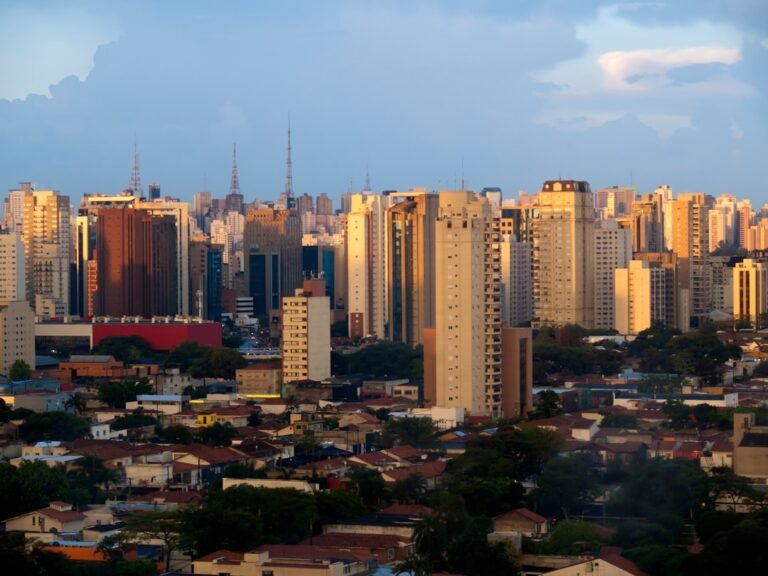
Cost of Living: Bangkok vs Chiang Mai 2026
A single expat can live comfortably in Chiang Mai for 40,000 baht monthly, while the same lifestyle in Bangkok costs 65,000 baht—a 62.5% premium for Thailand’s capital.
Last verified: April 2026
Executive Summary
| Expense Category | Bangkok Monthly (฿) | Chiang Mai Monthly (฿) | Difference (฿) | Bangkok Premium (%) |
|---|---|---|---|---|
| Rent (1-bed apartment, city center) | 18,000 | 8,500 | 9,500 | 111.8% |
| Utilities (electricity, water, internet) | 3,200 | 2,100 | 1,100 | 52.4% |
| Groceries (monthly) | 6,800 | 4,200 | 2,600 | 61.9% |
| Dining out (20 meals) | 7,500 | 4,000 | 3,500 | 87.5% |
| Transportation | 2,400 | 1,100 | 1,300 | 118.2% |
| Entertainment & gym | 3,100 | 1,800 | 1,300 | 72.2% |
| Total Estimated Monthly | 41,000 | 21,700 | 19,300 | 88.9% |
Bangkok vs Chiang Mai: The Complete Financial Breakdown
Thailand’s internal geography creates two distinct economic realities. Bangkok, with 10.9 million residents, functions as a regional economic hub where demand for housing and services pushes prices upward across nearly every category. Chiang Mai, home to 1.2 million people, operates at a fundamentally different cost structure. The disparity isn’t merely about price differences—it’s about purchasing power and lifestyle accessibility.
For expatriates deciding between these cities, understanding the financial reality matters enormously. Bangkok attracts corporate expats, digital nomads earning Western salaries, and retirees with substantial savings. Chiang Mai appeals to budget-conscious travelers and remote workers prioritizing lifestyle flexibility over career advancement. The question isn’t which city is better—it’s which financial model matches your circumstances. A person earning 80,000 baht monthly lives quite differently in each location.
Housing represents the largest cost driver, and this single category illustrates Bangkok’s premium most clearly. A modest one-bedroom apartment in Bangkok’s expat neighborhoods—Ari, Thonglor, or Phrom Phong—runs 18,000 to 22,000 baht monthly. The same apartment in Chiang Mai’s popular expat areas like Nimman or Old City rents for 7,000 to 10,000 baht. This gap widens dramatically when examining larger units. A two-bedroom apartment in central Bangkok costs 28,000 to 35,000 baht, while Chiang Mai equivalents rent for 11,000 to 15,000 baht. Over a year, housing costs devour 216,000 baht in Bangkok compared to 102,000 baht in Chiang Mai.
Secondary expenses reveal that Bangkok’s premium extends beyond accommodation. Electricity costs run roughly 40 percent higher due to year-round air conditioning demands and higher commercial rates. Internet service in Bangkok averages 1,200 baht monthly for reliable fiber connections, while Chiang Mai speeds are adequate at 600 to 800 baht. Transportation expenses in Bangkok—including BTS/MRT fares, occasional taxis, and ride-sharing—accumulate quickly. A person commuting across Bangkok spends 2,000 to 2,800 baht monthly, whereas Chiang Mai’s more compact geography requires perhaps 800 to 1,200 baht for similar weekly travel patterns.
Food pricing tells an interesting story. Street food in Bangkok costs marginally more than Chiang Mai—a pad thai runs 50 to 60 baht in Bangkok versus 40 to 50 baht in the north. However, expats often dine at Western restaurants to manage comfort and dietary preferences. This is where distance from Bangkok shows clearly. A burger and beer at an expat-friendly restaurant costs 350 to 450 baht in Chiang Mai but 500 to 700 baht in Bangkok. Over 20 restaurant meals monthly, this represents a 3,000 to 3,500 baht monthly gap.
Detailed Monthly Expense Comparison
| Expense Item | Bangkok (฿) | Chiang Mai (฿) | Notes |
|---|---|---|---|
| Studio apartment rent | 12,000–15,000 | 5,500–7,500 | Basic, no premium location |
| 1-bed apartment, mid-range area | 16,000–20,000 | 7,000–9,500 | Furnished, utilities included often in Chiang Mai |
| 2-bed apartment, central | 28,000–35,000 | 11,000–14,000 | Modern amenities expected in both |
| Electricity (summer months) | 1,200–1,800 | 700–1,000 | Bangkok runs AC year-round |
| Water | 300–500 | 200–350 | Minimal variation between cities |
| Internet (fiber or home broadband) | 900–1,200 | 600–900 | Bangkok offers more providers, faster speeds |
| Mobile phone (data plan) | 400–600 | 300–500 | Identical plans, Bangkok slightly pricier |
| Groceries (weekly shopping) | 1,600–1,800 | 1,000–1,200 | Supermarket prices, imported goods more in Bangkok |
| Street food meal | 50–80 | 35–60 | Per meal, everyday eating |
| Restaurant meal (Western) | 450–700 | 250–400 | Burger, sandwich, decent quality |
| BTS/MRT monthly pass equivalent | 800–1,200 | N/A (minimal public transit) | Bangkok only; Chiang Mai uses taxis/songthaew |
| Taxi/Grab average trip | 100–150 | 50–80 | Grab prices higher in Bangkok due to demand |
| Gym membership (international quality) | 1,800–2,500 | 900–1,500 | Includes classes, English-speaking trainers |
| Movie theater ticket | 250–320 | 140–180 | Bangkok cinemas charge premium |
| Haircut (expat salon) | 300–500 | 150–250 | Local Thai haircuts cheaper in both |
These figures reflect April 2026 pricing based on major expat communities’ actual spending patterns. Individual circumstances vary significantly depending on neighborhood selection, dining habits, and lifestyle choices. Someone living in Bangkok’s outer zones (Ramkhamhaeng, Bang Khapi) versus Thonglor experiences a 30 to 40 percent cost difference within the same city. Similarly, Chiang Mai expats choosing to live outside tourist zones and eating exclusively local food report monthly expenses as low as 15,000 to 18,000 baht.
Key Factors Shaping Cost Differences
1. Real Estate Market Dynamics
Bangkok’s real estate market includes 2.8 million residential units, with foreign demand concentrated in 15 to 20 specific neighborhoods. This concentration creates artificial scarcity and price inflation in expat-friendly areas. Landlords in Ari, Thonglor, and Sukhumvit expect premium rents because international companies cluster nearby. Chiang Mai’s estimated 420,000 residential units spread across a geographically larger area, creating genuine competition and lower equilibrium prices. Additionally, Bangkok’s property market experiences annual appreciation of 2.5 to 4 percent, reflecting genuine demand growth, whereas Chiang Mai’s appreciation hovers around 1.5 to 2.5 percent—signaling that landlords can’t extract excessive premiums without losing tenants.
2. Wages and Purchasing Power
Bangkok’s minimum wage stands at 370 baht daily (approximately 7,400 baht monthly for 20 working days), while Chiang Mai’s minimum wage is 330 baht daily (6,600 baht monthly). This 12 percent variance is smaller than the rent differential, explaining why local service workers—cleaners, shopkeepers, restaurant staff—must charge more to survive in Bangkok. Property owners, landlords, and business operators factor in these higher wage costs when setting prices. What’s critical for expats: this wage gap doesn’t affect your purchasing power if you earn in dollars, euros, or sterling. However, if you’re earning Thai baht from freelance or employment sources, this wage reality matters tremendously.
3. Tourism and Seasonal Demand
Bangkok attracts 20 to 24 million tourists annually, while Chiang Mai receives 2.5 to 3 million. This disparity shapes pricing power. Bangkok hotels, restaurants, and services assume continuous high-margin business from travelers. Chiang Mai’s tourism peaks during cool season (November through February) then drops significantly. During monsoon and hot season (May through October), expats can negotiate better rental rates and dining prices in Chiang Mai—rates can drop 10 to 15 percent—because landlords face genuine vacancy risks. Bangkok maintains stable pricing year-round because tourism and business travel sustain demand.
4. Healthcare and Insurance Costs
Bangkok contains 310 hospitals compared to Chiang Mai’s 85, including international-standard facilities that charge accordingly. A general practitioner consultation at a Bangkok expat clinic runs 800 to 1,200 baht, while Chiang Mai equivalents cost 500 to 800 baht. Dental work in Bangkok—fillings, cleanings—costs 15 to 25 percent more than Chiang Mai. For expats over 50, health insurance becomes significant. A comprehensive international health insurance policy covering both cities typically costs 35,000 to 55,000 baht annually for someone aged 45 to 55. However, many expats in Chiang Mai use Thai National Health Insurance (about 3,500 baht annually) and pay out-of-pocket for doctors, which costs substantially less than formal insurance in Bangkok.
5. Imported Goods and Specialty Services
Bangkok’s expatriate population creates viable markets for Western products. A can of imported coffee costs 180 to 220 baht in Bangkok supermarkets but 200 to 240 baht in Chiang Mai—the smaller market can’t achieve Bangkok’s bulk pricing. Specialty items like Greek yogurt, specific cheese varieties, or Western toiletries appear in Bangkok supermarkets as standard inventory. In Chiang Mai, these require hunting through smaller shops or online ordering. Services like professional dog grooming run 600 to 800 baht in Bangkok but 400 to 550 baht in Chiang Mai. English-language tutoring, a service many expats offer or require, commands 600 to 1,000 baht per hour in Bangkok versus 400 to 700 baht in Chiang Mai.
How to Use This Data When Making Your Decision
Calculate Your Personal Threshold
Use the detailed comparison table to estimate your actual monthly spending. Don’t assume “average”—most expats spend differently than averages suggest. Someone who exercises five days weekly might spend 2,200 baht on gym membership, meals, and transport combined, while another person spends 600 baht. Calculate three spending scenarios: minimal (local food, no air conditioning, minimal entertainment), moderate (mix of local and Western dining, reasonable comfort), and comfortable (Western dining frequently, quality gym, regular entertainment). Then multiply each by 12 to see annual savings differences. A person spending 35,000 baht monthly in Chiang Mai versus 55,000 in Bangkok saves 240,000 baht yearly—money that funds travel, healthcare, or builds emergency reserves.
Visit During Different Seasons
Chiang Mai’s seasonal pricing swings make timing crucial. If you’re considering Chiang Mai, spend two weeks there during cool season (November through January) and another two weeks during hot season (April through May). Cool season feels entirely different due to crowding and higher prices. You’ll experience the Chiang Mai that costs 35,000 to 40,000 baht monthly during peak season and the same city at 25,000 to 30,000 baht during off-season. Bangkok prices remain stable year-round due to consistent demand, so a single two-week visit captures most pricing information—though avoid national holidays when temporary price spikes occur.
Account for Your Earning Currency
If you earn in baht from Thai employment or Thai-based freelance work, both cities strain your budget proportionally. Someone earning 50,000 baht monthly spends roughly 80 percent in Chiang Mai or 82 percent in Bangkok on living expenses—the percentage doesn’t improve dramatically. However, if you earn in USD, EUR, or GBP, the equation shifts entirely. A remote worker earning $2,000 monthly (roughly 72,000 baht at current rates) can live exceptionally comfortably in either city, with 45,000 to 50,000 baht remaining after expenses in Chiang Mai or 30,000 to 35,000 in Bangkok. This $300 to $350 monthly difference shouldn’t drive your decision when lifestyle fit matters more.
Consider Hidden Costs Specific to Each City
Bangkok expats rarely account for convenience spending. Traffic congestion means more Grab rides, takeout instead of home-cooked meals, and premium prices at nearby shops versus hunting for better deals across the city. Over a year, this invisible spending reaches 15,000 to 20,000 baht. Chiang Mai’s slower pace reduces this friction—you’ll cook more, walk to nearby shops, and experience fewer pressure-driven purchases. However, Chiang Mai occasionally requires Bangkok trips for visa runs, specialty medical care, or business. Three to four round-trip flights to Bangkok annually cost 3,000 to 6,000 baht each direction—a hidden expense not captured in standard living-cost data.
Frequently Asked Questions
Can I actually live on 20,000 baht monthly in Chiang Mai like some websites claim?
Technically yes, but it requires specific choices most Westerners find uncomfortable. You’d need to rent a small room outside tourist areas (4,000 to 5,000 baht), eat exclusively Thai street food and market meals (1,500 to 2,000 baht), avoid transportation expenses by walking and biking, skip gym memberships and entertainment, and accept sporadic internet or use only public WiFi. The remaining 10,000 baht covers utilities and minimal buffer. This lifestyle works for some—particularly younger digital nomads or people who’ve lived in developing countries extensively. However, for most expats accustomed to private space, reliable internet, regular dining out, and fitness access, realistic Chiang Mai budgeting starts at 25,000 to 30,000 baht monthly.
Is Bangkok worth the extra 20,000 baht monthly expense?
This depends entirely on your priorities and employment situation. Bangkok justifies its cost for corporate expats earning substantial salaries, people requiring regular business travel to regional offices, or those prioritizing career advancement in Southeast Asia. Bangkok provides 310 hospitals including world-class facilities, 3,400 restaurants, extensive international communities, and direct flights to hundreds of destinations. However, if you’re remote-working or retired, prioritizing lifestyle quality and time flexibility, Bangkok’s premium often yields minimal additional value. The extra 20,000 baht monthly—240,000 baht annually—could fund significant travel, healthcare upgrades, or quality-of-life improvements in Chiang Mai instead of slightly more convenient access to restaurants and shops.
Which city has better value for retirees on fixed budgets?
Chiang Mai dramatically outperforms Bangkok for retirees. Most retirees receive fixed income in home currency (pensions, investment distributions) and want predictable expenses. Chiang Mai’s lower baseline costs mean a 50,000 baht monthly budget provides comfortable living—private apartment, dining out regularly, gym membership, occasional travel. The same 50,000 baht in Bangkok creates constant budget pressure. Additionally, Chiang Mai hosts Thailand’s largest retiree community with established social networks, volunteer opportunities, and specialized medical services catering to older adults. Several