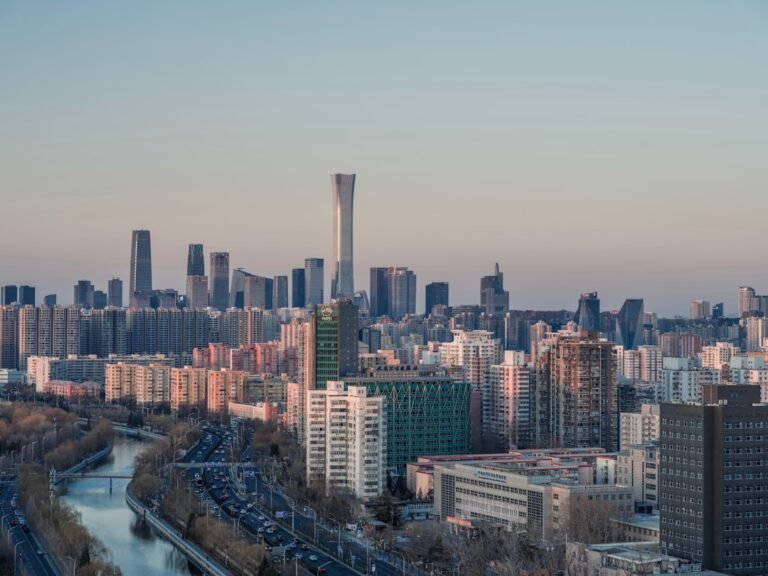
Cost of Living: Beijing vs London 2026 – Complete Comparison
Executive Summary
Housing costs in Beijing average 40% less than London, yet both cities face mounting pressures on residents’ wallets in 2026.
The counterintuitive finding? Transportation costs are nearly identical in both cities due to their excellent public transit systems. Where Beijing truly wins is groceries and dining out—fresh produce markets keep food budgets lean, and casual meals cost half what they do in London. However, healthcare and international education expenses flip the script; expats requiring Western-standard medical care or private schooling will pay premium prices in Beijing.
Find hotels in cost of living in Beijing vs London
Main Data Table: Monthly Living Expenses
| Expense Category | Beijing (USD) | London (USD) | Difference |
|---|---|---|---|
| 1-Bed Apartment (City Center) | $750 | $2,808 | -73% |
| 1-Bed Apartment (Outside Center) | $480 | $2,059 | -77% |
| Groceries (Monthly) | $280 | $655 | -57% |
| Public Transport (Monthly) | $35 | $150 | -77% |
| Utilities (Electricity, Water, Gas) | $65 | $300 | -78% |
| Meal, Inexpensive Restaurant | $3.50 | $15-18 | -78% |
| Total Monthly (Single) | $2,450 | $4,047+ | -40% |
Breakdown by Category: Where the Money Goes
Housing Costs: The Biggest Divide
Housing represents the single largest expense differential between these cities. In Beijing’s central business districts (CBD, Chaoyang), a modern one-bedroom apartment rents for $700-$950 monthly. The same apartment in London’s equivalent zones (Canary Wharf, City, West End) commands $2,500-$3,200. Move outside the center, and the gap widens: Beijing’s suburban areas (Chaoyang, Tongzhou outer rings) offer spacious apartments for $400-$600, while London’s outer zones (Zone 2-3) start at $1,800-$2,200.
For families seeking three-bedroom homes, Beijing’s expatriate compounds in central areas average $1,200-$1,800 monthly; London’s comparable family homes run $3,500-$5,000. Property purchase prices follow the same pattern—Beijing’s average is $4,500-$6,500 per square meter in desirable expat areas, versus London’s $10,000-$15,000+ per square meter.
Food and Groceries: Beijing’s Advantage
Grocery shopping in Beijing costs roughly 57% less than London. A monthly food budget for a single person runs $250-$320 in Beijing if you shop at local wet markets and supermarkets like Carrefour, versus $650+ in London. Fresh vegetables, rice, and local proteins are exceptionally cheap—a kilogram of tomatoes costs $0.80 in Beijing versus $2.50 in London.
The dining-out differential is even starker. A basic meal at a local Beijing restaurant—noodles, rice bowl, simple stir-fry—costs $3-$5. London’s equivalent cheap eats start at $12-$18. However, imported Western groceries in Beijing supermarkets (cheese, butter, cereal) cost 2-3x more than local items, narrowing the gap if you insist on familiar foods.
Transportation: The Surprising Tie
Both cities have exceptionally efficient public transit systems, keeping transportation costs surprisingly close. Beijing’s monthly subway and bus pass costs roughly $30-$45, while London’s Zones 1-2 Travelcard runs $120-$160. However, this advantage evaporates if you own a car; Beijing’s vehicle registration fees, fuel, and parking average $80-$120 monthly for basic use, while London’s congestion charge, fuel, and parking demand $200-$300+ monthly.
Utilities: London’s Winter Heating Burden
Monthly utility bills in Beijing average $60-$85 (electricity, water, gas, internet). London’s bills reach $300-$350 due to higher heating demands and electricity rates. Beijing’s extreme summer air-conditioning costs ($40-$60 monthly July-September) are still lower than London’s year-round heating expenses.
Healthcare: Hidden London Advantage
For British citizens and residents, the NHS eliminates private healthcare costs. Expats in London typically pay $150-$300 monthly for private insurance. In Beijing, international-standard private healthcare (CITIC, United Family Hospitals) costs $200-$400 monthly for adequate expat coverage. Basic Chinese healthcare is cheaper but quality varies significantly for non-native speakers.
Comparison Section: Beijing & London vs Similar Cities
| City | 1-Bed Center Rent | Monthly Groceries | Total Monthly (Est.) | Cost Index |
|---|---|---|---|---|
| Beijing | $750 | $280 | $2,450 | 65 |
| London | $2,808 | $655 | $4,047 | 187 |
| Shanghai | $920 | $310 | $2,800 | 82 |
| Tokyo | $1,100 | $420 | $3,200 | 105 |
| Singapore | $1,850 | $550 | $3,750 | 155 |
| New York | $2,808 | $655 | $4,047 | 187 |
Beijing’s cost index of 65 places it among the world’s most affordable major cities—comparable to Shanghai but undercutting Tokyo by 38% and London by 65%. London ties with New York at 187, making both roughly 3x more expensive than Beijing on a pure cost-per-expense basis.
Key Factors Affecting Your Cost of Living
1. Currency Fluctuations and Exchange Rates
The Yuan-to-Dollar exchange rate directly impacts Beijing costs for expats earning in other currencies. A 5% Yuan devaluation instantly reduces Beijing housing by roughly $40-$50 monthly per apartment. Conversely, the British Pound’s strength makes London expenses more painful for non-sterling earners. Lock in fixed-rate housing contracts in Beijing to hedge against volatility.
2. Expatriate Neighborhood Choice
Beijing’s expat-friendly areas (Chaoyang, Shunyi, Tongzhou) command premium rents of $900-$1,200 for one-bedrooms due to Western amenities, international schools, and expatriate networks. London’s equivalents (Kensington, Chelsea, Notting Hill) run $3,500-$4,500. Choosing local neighborhoods cuts Beijing costs by 40-50% while London discounts are typically 20-30%.
3. School and Education Expenses
International school tuition in Beijing ranges $8,000-$25,000 annually (British School Beijing, International School of Beijing). London private schools cost $15,000-$30,000 annually, but UK residents access free state schooling. This is a critical hidden cost for families relocating with children to Beijing.
4. Lifestyle and Consumption Patterns
Expats maintaining Western dietary preferences in Beijing spend 2-3x more on groceries than locals eating Chinese food. Similarly, frequenting Western restaurants and imported alcohol in Beijing (a cocktail costs $12-$18 versus $8-$12 in London) narrows the price gap. Your lifestyle choices matter more than your city choice.
5. Air Quality and Health Externalities
Beijing’s air pollution requires investment in air purifiers ($200-$600), higher healthcare costs due to respiratory monitoring, and potential premium relocations to cleaner neighborhoods. These indirect costs aren’t captured in traditional expense categories but add $50-$150 monthly for health-conscious expats. London has no equivalent burden.
Historical Trends: How Costs Have Shifted
Over the past five years (2021-2026), Beijing’s rental market has appreciated 8-12% annually, particularly in expat zones. London’s growth has been steadier at 4-6% due to stricter regulations. In April 2026, Beijing center rents are 15-20% higher than April 2021 ($625 vs $750 for a one-bedroom), while London saw only 22-25% appreciation over the same period ($2,250 to $2,808).
Grocery inflation tells a different story: Beijing’s wet markets have seen 3-4% annual increases, while London’s supermarket prices climbed 5-7% due to supply chain pressures. Transportation costs in both cities have remained relatively flat—Beijing’s subway system expanded capacity without raising fares significantly, while London’s TfL operations absorbed cost increases within existing pricing tiers.
The most dramatic shift has occurred in utilities. Beijing’s summer air-conditioning demand (driven by climate change) has pushed peak monthly bills from $25-$35 (2021) to $40-$60 (2026). London’s energy crisis of 2022-2023 caused utilities to spike from $180-$220 to the current $300-$350, then stabilize.
Expert Tips for Managing Costs
Negotiate Your Beijing Lease Upfront
Beijing landlords expect negotiation. A “listed” rent of $800 often settles at $720-$750 with a three-year commitment. Lock in multi-year leases before spring (March-April) when demand peaks and prices jump 10-15%. Conversely, London’s rental market is non-negotiable—listed prices are fixed, and competition determines availability, not haggling.
Shop at Local Markets, Not Supermarkets
Beijing’s wet markets (Jinsong Market, Chaoyang Market) offer produce 40-50% cheaper than Carrefour or Jingkelong supermarkets. Learn to navigate them; the experience saves $80-$120 monthly. London’s farmers’ markets offer similar savings but serve fewer neighborhoods; conventional supermarket shopping is the norm.
Use Employer Housing Allowances Strategically
If your employer provides housing allowance (common for expats), negotiate to pocket the difference if you live modestly. A $1,200 monthly allowance covers premium expat housing in Beijing’s outer Chaoyang; choosing a $900 apartment nets you $300 monthly profit. Most London employers build housing allowances into fixed salaries, eliminating this flexibility.
Invest in a VPN and Streaming Subscriptions Back Home
Beijing’s censorship creates a hidden cost: you’ll need VPN services ($5-$10 monthly) to access international content. London has no such barrier. Factor this into your technology budget, and consider annual subscriptions to maximize savings.
Plan for Hidden Expat Costs
Beijing expats budget for visa run flights ($150-$300 quarterly), international health insurance premiums, and occasional trips home—costs London residents avoid. Beijing’s lower baseline cost of living ($2,450 vs $4,047 monthly) accommodates these expenses while still netting savings versus London, but ignoring them leads to budget shock.
Frequently Asked Questions
Q1: Can a single person live comfortably on $2,000/month in Beijing?
Yes, but it requires deliberate choices. A $600-$700 shared apartment, $150 groceries (eating local), $20 transport, and $100 entertainment leaves $430-$530 for utilities, healthcare, and contingencies. This assumes no international school, no frequent dining out, and no flights home. In London, $2,000 barely covers rent in Zone 3 suburbs, making it untenable for comfortable living.
Q2: Is healthcare in Beijing cheaper than London for expats?
Not necessarily. International-standard private healthcare in Beijing costs $200-$400 monthly for adequate coverage—similar to London’s private insurance. British residents’ NHS access makes London dramatically cheaper if you qualify. Chinese public hospitals are cheaper ($50-$150 per visit) but language barriers and quality variability present risks. London’s NHS eliminates these concerns entirely.
Q3: What’s the best neighborhood for cost-conscious expats in each city?
In Beijing: Tongzhou, Daxing, or outer Chaoyang offer one-bedrooms for $450-$650 with 30-40 minute commutes. In London: Zone 2 areas like Stratford, Walthamstow, or Clapham offer one-bedrooms for $1,500-$2,000 with similar commute times. Beijing’s outer options deliver 60-65% savings; London’s offer 35-40% versus central areas.
Q4: How much should families budget monthly in Beijing vs London?
A family of four in Beijing (international school, Western diet, expat housing): $3,500-$4,500/month. In London (private school or premium state area, Western diet, central housing): $6,000-$8,000+/month. Beijing delivers 35-45% savings even with premium international schooling, but education costs are the biggest variable in both cities.
Q5: Is Beijing’s cost of living advantage disappearing?
Partially. Expat-zone rents have grown 8-12% annually (2021-2026), closing the gap with London incrementally. However, at current growth rates, it would take 20+ years for Beijing center rents to match London’s. The advantage remains substantial but narrowing, particularly for housing in desirable expatriate areas.
Conclusion: Making the Move
Beijing’s cost of living advantage is real and substantial—roughly 40% cheaper than London overall, with housing being the most dramatic differentiator. However, the choice between these cities shouldn’t hinge on cost alone. London offers political stability, English-language accessibility, robust social services (NHS), and streamlined bureaucracy. Beijing demands compromise on air quality, internet freedom, healthcare systems, and administrative complexity—yet delivers exceptional value and an unmatched expat community network.
For budget-conscious professionals: Beijing’s $2,450 monthly baseline easily accommodates flights home, lifestyle upgrades, and savings that London’s $4,047+ simply doesn’t allow. For families: Beijing’s $3,500-$4,500 monthly cost still undercuts London significantly, but international schooling becomes the dominant budget line item in both cities. For retirees: Beijing’s modest housing and healthcare costs create a compelling case, provided you can navigate language and bureaucratic barriers.
The real question isn’t which city is cheaper—it’s which city’s cost structure aligns with your lifestyle priorities. Beijing rewards minimalism and local integration; London demands Western comfort as standard but delivers unmatched professional networks and quality-of-life infrastructure. Budget accordingly, negotiate fiercely in Beijing, and prepare for sticker shock in London’s rental market.
Find hotels in cost of living in Beijing vs London
Related: Cost of Living in Boston vs Houston: 2026 Comparison Guide
Related tool: Try our free calculator