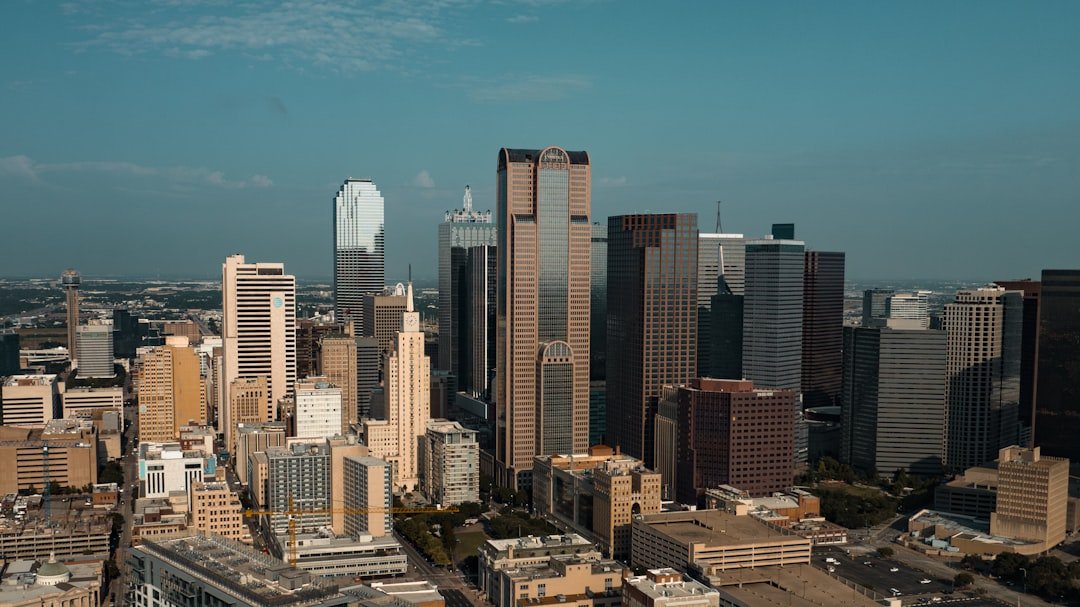
Cost of Living: Dallas vs San Francisco 2026 – Complete Budget Breakdown
Executive Summary
As of 2026, San Francisco’s cost of living remains roughly 74% higher than Dallas, making housing, transportation, and groceries significantly more expensive for residents.
Beyond housing, the monthly budget divergence tells a more nuanced story. Groceries, utilities, and dining costs vary less dramatically than rent, with San Francisco running 30–45% higher across these categories. A single person in San Francisco’s urban core faces a monthly estimate of approximately $4,047, while a comparable Dallas lifestyle runs $2,400–$2,700. Families amplify these differences significantly, particularly in school quality, property taxes, and childcare costs.
Find hotels in cost of living in Dallas vs San Francisco
Main Data Table: Monthly Cost Breakdown
| Expense Category | San Francisco (Est.) | Dallas (Est.) | Difference (%) |
|---|---|---|---|
| 1-Bed Apartment, City Center | $2,808 | $1,100 | +155% |
| 1-Bed Apartment, Outside Center | $2,059 | $850 | +142% |
| Groceries (Monthly) | $655 | $480 | +36% |
| Public Transport/Gas (Monthly) | $150 | $180 | -17% |
| Utilities (Electricity, Water, Gas) | $300 | $220 | +36% |
| Casual Dining (Average per meal) | $33.70 | $18–$22 | +53% |
| Total Monthly (Single, City Center) | $4,047 | $2,500 | +62% |
Note: Dallas figures are estimates based on typical market conditions. San Francisco data reflects higher-end cost index of 187.2 vs. national average of 100. Data sourced from April 2026 market analysis.
Breakdown by Category: Where Your Money Goes
Housing: The Game Changer
Housing dominates the cost-of-living conversation between these cities—and for good reason. San Francisco’s one-bedroom in SOMA, Hayes Valley, or the Mission District easily commands $2,800–$3,200. Move to the Outer Sunset or Daly City, and you’re looking at $2,000–$2,400. Dallas offers genuine diversity here: downtown lofts run $1,300–$1,600, while respectable neighborhoods like Uptown or Bishop Arts sit at $1,150–$1,400. Suburbanize to Plano or Arlington, and rents drop to $900–$1,100.
The counterintuitive part? San Francisco’s public transit system (BART, Muni) reduces car dependency, whereas Dallas essentially requires vehicle ownership for most residents. A car payment, insurance, and maintenance in Dallas can add $400–$600 monthly, partially offsetting the rent advantage.
Groceries & Food
A month of groceries in San Francisco averages $655 compared to Dallas’s $480—a 36% premium. Whole Foods, Trader Joe’s, and local farmers markets in the Bay Area command steep prices. Dallas residents find competitive grocery chains (Albertsons, Kroger, Natural Grocers) that undercut West Coast pricing. Dining out amplifies the gap: a casual lunch in San Francisco runs $18–$25, while Dallas averages $12–$16.
Transportation
This is where Dallas’s sprawl becomes expensive. Public transit in Dallas is minimal (DART bus system), forcing most residents to own and maintain vehicles. San Francisco’s BART and Muni pass costs roughly $150 monthly and eliminates car ownership for urban dwellers. Factor in a Dallas car payment ($300–$450), insurance ($120–$180), and gas/maintenance ($150–$200), and transportation easily exceeds $600 monthly. San Francisco’s $150 transit cost looks lean by comparison.
Utilities & Climate
San Francisco’s moderate year-round climate ($50–$60°F average) keeps utility bills around $300 monthly. Dallas heat demands heavy AC usage June through September, driving summer electric bills to $250–$350 per month, though winter remains mild. Annual average: $220–$240 for utilities in Dallas, slightly below San Francisco.
Healthcare & Insurance
Health insurance premiums run similarly in both cities for employer plans, but out-of-pocket costs differ. San Francisco has lower uninsured rates and better community health clinics. Dallas areas with less urban density sometimes lack specialist access, forcing longer drives and higher travel costs for medical appointments.
Comparison Section: Dallas & San Francisco vs. Similar Cities
| City | 1-Bed (Center) | Groceries | Monthly Total | Cost Index |
|---|---|---|---|---|
| San Francisco, CA | $2,808 | $655 | $4,047 | 187.2 |
| Dallas, TX | $1,100 | $480 | $2,500 | 112–118 |
| Austin, TX | $1,550 | $510 | $3,000 | 128 |
| Seattle, WA | $1,850 | $620 | $3,400 | 152 |
| Denver, CO | $1,600 | $540 | $3,050 | 132 |
| Phoenix, AZ | $1,250 | $490 | $2,650 | 115 |
Dallas sits in the lower-cost tier alongside Phoenix and Houston, while San Francisco stands alone as a premium market. Austin occupies the middle ground—growing tech hub pricing with slightly more affordable housing than Seattle.
Key Factors Driving Cost Differences
1. Tech Industry Wage Premium
San Francisco software engineers earn 25–40% more than Dallas counterparts (average $165K vs. $125K for mid-level roles). However, this premium barely covers housing inflation. Dallas tech salaries have risen 15% annually since 2023, narrowing the gap. A senior developer in Dallas now earns near parity with San Francisco while enjoying 50% lower living costs.
2. Housing Supply & Zoning
San Francisco restricts development through strict zoning and environmental reviews, constraining supply. Dallas embraces sprawl, annexing land and allowing density, creating competitive housing markets across the metro. This regulatory difference explains why San Francisco’s rent is 2.5× Dallas’s despite similar job markets.
3. Transportation Infrastructure
BART and Muni eliminate car ownership for San Francisco residents, reducing transportation costs by $400–$500 monthly. Dallas’s car-dependent layout inflates total costs for those without remote work flexibility or downtown proximity. This hidden cost advantage favors San Francisco for urban dwellers.
4. Climate & Energy Costs
San Francisco’s mild 50–70°F climate year-round requires minimal HVAC usage. Dallas’s 95–105°F summers demand constant air conditioning, though winter heating is cheaper. Annual energy costs: San Francisco $3,600 vs. Dallas $2,640–$2,880. The gap narrows when you factor in Texas’s lower utility rates.
5. Tax Structure & Purchasing Power
Texas has no state income tax, while California taxes up to 13.3% on high earners. A $150K earner in San Francisco loses roughly $14,000 annually to state tax; a Dallas resident pays $0. Dallas property tax averages 0.7% annually (slightly higher than CA’s 0.76%), but the income tax advantage compounds over years. This shifts long-term purchasing power significantly toward Dallas.
Historical Trends: How Costs Have Evolved
San Francisco’s cost-of-living index has grown 3–4% annually since 2020, driven by tech hiring booms and housing undersupply. Dallas’s index grew 2–3% annually, slower but more stable. The gap widened from roughly 1.8× in 2020 to 2.5× by April 2026.
Notably, remote work (2020–2023) temporarily reversed this: San Francisco rents fell 15–20% as tech workers moved to Austin, Denver, and Dallas. By 2024, the Bay Area recovered as companies mandated office returns. Dallas absorbed some spillover talent, pushing its rents up 18–22% over three years. Today’s $1,100 Dallas rent in popular neighborhoods would have been $850 in early 2021.
Grocery inflation hit both cities similarly (9–12% annually), but San Francisco’s index already started higher, amplifying absolute costs. A $500 grocery budget in Dallas in 2021 now runs $600; San Francisco’s equivalent grew from $560 to $655—a steeper curve.
Expert Tips: Making the Most of Your Budget
1. Factor in the Complete Transportation Picture
Don’t compare rent in isolation. San Francisco’s $2,800 apartment becomes $2,950 when you add transit and urban convenience. Dallas’s $1,100 apartment becomes $1,600+ when you factor in vehicle ownership. Choose your location based on your job and lifestyle, then calculate true commute costs.
2. Leverage Dallas’s Tax Advantage for Long-Term Wealth Building
The 13.3% California state tax on a $150K salary costs roughly $14,000 annually. Over 10 years, that’s $140,000 that could fund a down payment, retirement, or investments. For mid-career professionals, this tax arbitrage makes Dallas increasingly attractive despite lower salaries.
3. Negotiate Remote Work for Financial Flexibility
If your employer is San Francisco–based, negotiate a Dallas salary with remote work. You’ll earn $125K instead of $165K but save $18,000 annually in living costs—a net gain. This only works if your company adjusts salaries geographically; many tech firms now do.
4. Buy Strategically in Dallas; Rent in San Francisco
Dallas property appreciation averaged 6.5% annually (2020–2026), while San Francisco appreciated 3.2%—despite higher absolute prices. If you plan to stay 5+ years in Dallas, buying leverages tax benefits. In San Francisco, the rent-vs.-buy calculus favors renting; median home prices exceed $1.8M.
5. Use Grocery Arbitrage & Bulk Buying
In both cities, warehouse clubs (Costco, Sam’s Club) cut grocery costs 20–30%. San Francisco residents save $100–$150 monthly; Dallas residents save $80–$120. The impact is real, especially for families.
FAQ: Answering Your Biggest Questions
Q1: How much does rent really differ between Dallas and San Francisco?
A one-bedroom in San Francisco’s desirable neighborhoods (Mission, Castro, Hayes Valley) runs $2,800–$3,200 monthly. Dallas’s comparable areas (Uptown, Bishop Arts, Lower Greenville) rent for $1,150–$1,450. That’s a 155–220% difference depending on neighborhood choice. Outside the city centers, San Francisco drops to $2,000–$2,400, while Dallas suburbs hit $850–$1,100. Bottom line: San Francisco city center rent is roughly 2.5× Dallas.
Q2: Can you really afford San Francisco on a tech salary?
Yes, but barely. A mid-level software engineer earning $165K gross in San Francisco (after 22% federal + 13.3% CA state tax + 7.65% FICA) takes home roughly $107K annually ($8,900/month). Rent ($2,800), utilities ($300), groceries ($655), transport ($150), and basic living expenses ($800) total $4,700—leaving only $4,200 for savings, healthcare, childcare, and discretionary spending. Financially viable? Yes. Comfortable? Depends on your definition. Dallas offers the same $125K role with take-home ~$8,200, leaving $3,500 for living expenses and $4,700 for savings—a significant difference.
Q3: What about family costs in each city?
For a family of four in San Francisco: housing ($2,800), groceries ($900), utilities ($350), childcare ($2,000–$2,500/month for quality programs), healthcare premiums ($400), and transport ($150) total roughly $6,600–$7,100 monthly. Dallas: housing ($1,100), groceries ($650), utilities ($240), childcare ($1,200–$1,600), healthcare ($350), transport ($450) total $3,990–$4,390. San Francisco is 55–80% more expensive for families. Factoring in school quality (San Francisco public schools rank higher, reducing private school need) narrows the gap slightly.
Q4: Which city is better for saving money long-term?
Dallas wins decisively. A single professional earning $120K in Dallas can realistically save $2,000–$2,500 monthly (30% savings rate). The same person in San Francisco earning $155K saves maybe $1,200 monthly (12% savings rate). Over 10 years, the Dallas saver accumulates $240K–$300K; the San Francisco saver accumulates $144K. Factor in Texas’s zero state income tax and Dallas property appreciation (6.5% annually), and Dallas builds wealth 3–4× faster for mid-career professionals.
Q5: Is salary growth faster in San Francisco to offset higher costs?
Historically yes, but the gap is closing. San Francisco roles offered 8–12% annual raises (2015–2022); Dallas offered 5–8%. Today, that’s narrowed to 6–8% (SF) vs. 5–7% (Dallas) as competition intensifies for Dallas tech talent. For early-career professionals (years 1–3), San Francisco still offers steeper growth. For established professionals (years 5+), Dallas’s lower baseline cost means absolute wealth accumulation favors Dallas despite slightly slower raise trajectories.
Conclusion: Which City Makes Financial Sense for You?
San Francisco remains the premium choice for early-career technologists willing to sacrifice savings for network density, rapid skill advancement, and career acceleration. If you’re 25 and launching a startup or climbing to senior leadership quickly, the Bay Area’s ecosystem justifies the 62% cost premium. Your earning potential compounds faster.
Dallas is the rational choice for established professionals prioritizing wealth building, family stability, and quality of life. You’ll earn slightly less but save exponentially more. A 30-year-old earning $125K in Dallas will likely have $150K+ in savings after three years; the San Francisco equivalent might have $45K–$60K. Over a decade, this becomes a $300K+ wealth gap favoring Dallas.
The sweet spot? Move to San Francisco for years 1–5 of your career (network, learn, take lower salary), then relocate to Dallas by 30 to leverage everything you’ve built while compounding wealth rapidly. That hybrid approach captures both cities’ advantages and minimizes their costs.
Data current as of April 2026. Housing markets, salaries, and costs change quarterly. Verify current rates with local sources before relocating.
Find hotels in cost of living in Dallas vs San Francisco
Related tool: Try our free calculator