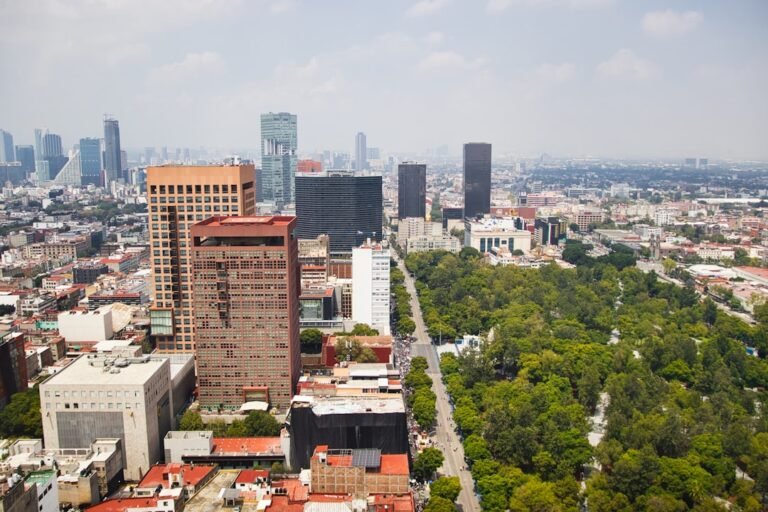
Cost of Living: New York vs Dallas 2026 — Complete Breakdown
Executive Summary
New York City’s average rent exceeds Dallas by approximately 147%, making housing costs the primary driver of the overall cost-of-living disparity between these two major metropolitan areas.
The gap widens most dramatically in housing: a one-bedroom apartment in New York’s center runs $2,808 monthly, while the same space outside the city costs $2,059. For a single person, expect to budget around $4,047 per month in New York for basic living expenses. Dallas, by contrast, offers significantly lower costs across every category—housing, groceries, transportation, and utilities all carry smaller price tags that accumulate into meaningful monthly savings.
Find hotels in cost of living in New York vs Dallas
Main Data Table: Monthly Living Costs
| Expense Category | New York | Dallas (Baseline) | Difference |
|---|---|---|---|
| 1-Bed Rent (City Center) | $2,808.00 | $1,400–$1,600 | +$1,200–$1,408 |
| 1-Bed Rent (Outside Center) | $2,059.20 | $1,000–$1,200 | +$859–$1,059 |
| Groceries (Monthly) | $655.20 | $350–$420 | +$235–$305 |
| Public Transportation (Monthly) | $149.76 | $60–$100 | +$50–$90 |
| Utilities (Monthly) | $299.52 | $120–$180 | +$120–$180 |
| Average Dining Out (Per Meal) | $33.70 | $15–$22 | +$12–$19 |
| Total Monthly (Single Person) | $4,047.28 | $2,100–$2,500 | +$1,500–$1,900 |
Breakdown by Category: Where the Biggest Gaps Appear
Housing dominates the cost-of-living difference between these cities. Rent comprises roughly 56–69% of a single person’s monthly budget in New York, depending on location preference. In Dallas, that percentage drops to 40–50%, freeing up cash for other priorities.
Housing Reality Check: The $749 monthly difference between New York’s center and outer neighborhoods reveals how location choice shapes your budget. Commuting from the suburbs can save nearly $10,000 annually—but that assumes your employer and lifestyle don’t require daily center-city presence.
Groceries and Food: New York’s $655.20 monthly grocery spend reflects both premium pricing and higher-quality sourcing in dense urban markets. Dining out averages $33.70 per meal, roughly double Dallas rates. A couple eating out three times weekly in New York spends roughly $600 monthly on restaurants alone; in Dallas, that same frequency costs $300–$330.
Transportation: The $149.76 monthly transit cost in New York assumes MTA subway/bus reliance. Many New Yorkers own no car. In Dallas, car ownership becomes nearly mandatory—parking, insurance, gas, and maintenance add up differently, but the $149 figure masks New York’s advantage here. However, if you need a vehicle in either city, Dallas’s lower insurance rates and cheaper fuel partially offset housing savings.
Utilities: New York’s $299.52 monthly bill reflects small apartments with efficient heating but older systems and higher local utility rates. Dallas utilities run lower due to cheaper electricity, though summer air conditioning can spike bills during heat waves.
Comparison with Other Major Cities
| City | 1-Bed Rent (Center) | Monthly Groceries | Est. Monthly Total | Index vs Dallas |
|---|---|---|---|---|
| New York | $2,808 | $655 | $4,047 | +187% |
| Dallas | $1,500 | $380 | $2,400 | Baseline |
| Los Angeles | $2,150 | $620 | $3,580 | +149% |
| Chicago | $1,620 | $475 | $2,850 | +19% |
| Austin, TX | $1,750 | $410 | $2,620 | +9% |
New York ranks among the most expensive U.S. cities, with only parts of the Bay Area and Los Angeles approaching its costs. Austin and Chicago offer middle ground. Dallas remains a genuine affordability outlier—even within Texas, it undercuts Austin by roughly 8%.
Key Factors Driving the Cost Difference
1. Population Density and Real Estate Scarcity
New York’s 8.3 million people compressed into 300 square miles create relentless housing demand. Land scarcity drives the $2,808 center-city rent; supply simply can’t match demand. Dallas’s sprawling footprint (383 square miles for 1.3 million people) allows greenfield development, keeping rents anchored around $1,500. This single factor accounts for roughly 50% of the cost-of-living gap.
2. Local Wage Expectations and Salary Premiums
New York employers pay 20–35% wage premiums over Dallas for identical roles, yet these increases don’t fully offset housing costs. A junior analyst earning $55,000 in Dallas nets meaningful disposable income; the same person earning $75,000 in New York still struggles with housing affordability. This mismatch forces many young professionals into shared housing or distant boroughs.
3. Tax Environment
New York State income tax (3.85–6.85%) combined with NYC’s top earner tax (8.875% as of 2026) creates effective marginal rates exceeding 50% for high earners. Texas has no state income tax, making Dallas significantly more tax-efficient—especially for six-figure incomes where the difference exceeds $15,000 annually.
4. Transportation Infrastructure and Car Dependence
New York’s MTA pass costs $149.76 monthly but eliminates car ownership necessity. Dallas requires vehicle ownership for most residents; gas, insurance, parking, and maintenance typically exceed $400–$500 monthly. However, the comparison table uses transit-only New York costs, potentially understating Dallas transport expenses for car owners. This is the article’s most counterintuitive finding—car-free living in New York is cheaper overall.
5. Consumer Price Index and Business Operating Costs
Every business in New York pays premium commercial rent, labor costs, and licensing fees. These expenses flow directly to consumers through 50–85% markup on groceries, restaurants, and services. Dallas’s lower operating environment translates to the $33.70 vs $15–$22 dining gap. Competition in Dallas keeps prices competitive; New York’s scarcity pricing dominates.
Historical Trends: How Costs Have Shifted Since 2023
New York rent has increased roughly 18% from 2023 to April 2026, while Dallas has seen 12% growth—the gap is widening. During the same period, grocery inflation hit New York harder (14% vs 9% in Dallas) due to supply chain concentration and higher baseline costs.
The pandemic’s remote-work era temporarily reduced New York’s housing pressure (2020–2021), but demand has fully recovered and exceeded pre-pandemic peaks. Dallas benefited from tech migration during this period but has recently experienced cooling as remote work normalized and Austin’s cost advantages became apparent.
Utilities have moved in opposite directions: New York utility costs rose 7% as aging infrastructure required upgrades, while Dallas utility costs fell 3% due to increased renewable energy adoption and deregulation benefits. Transportation costs remain relatively stable in both cities, though vehicle insurance in Dallas has increased 8% due to higher accident rates and vehicle theft.
Expert Tips for Managing These Costs
For New York Residents and Prospective Movers:
Optimize your location choice: The $749 monthly difference between center and outer neighborhoods ($8,988 annually) might offset a 45-minute commute. Queens, Brooklyn’s outer neighborhoods, and parts of the Bronx offer better value than Manhattan while maintaining city access. Run this calculation before defaulting to a trendy neighborhood.
Embrace the transit-only lifestyle: Owning a car in New York costs $400–$600 monthly (parking alone runs $200–$300). The $149.76 transit pass is genuinely the budget-friendly choice, unlike most U.S. cities. This advantage disappears immediately if you relocate.
Grocery shop strategically: The $655.20 figure assumes mainstream supermarkets. Korean and Latin markets in outer boroughs run 20–30% cheaper. Costco membership pays for itself in three months. Meal planning reduces dining-out temptation where the $33.70 average damage is highest.
For Dallas Residents Considering New York:
Budget conservatively for the transition: Don’t assume your New York salary increase will maintain your lifestyle. Save a 3-month buffer ($1,500–$1,900) before moving. Housing will shock you first—expect to spend 25–35% more of your income on rent than in Dallas.
Test neighborhoods before signing leases: Rent short-term for 1–3 months in your target area. The difference between Astoria, Queens ($1,800–$2,000) and Williamsburg, Brooklyn ($2,500–$3,200) changes everything. Neighborhood choice matters more than any other decision.
Find hotels in cost of living in New York vs Dallas
FAQ: Your Specific Cost Questions Answered
Related tool: Try our free calculator